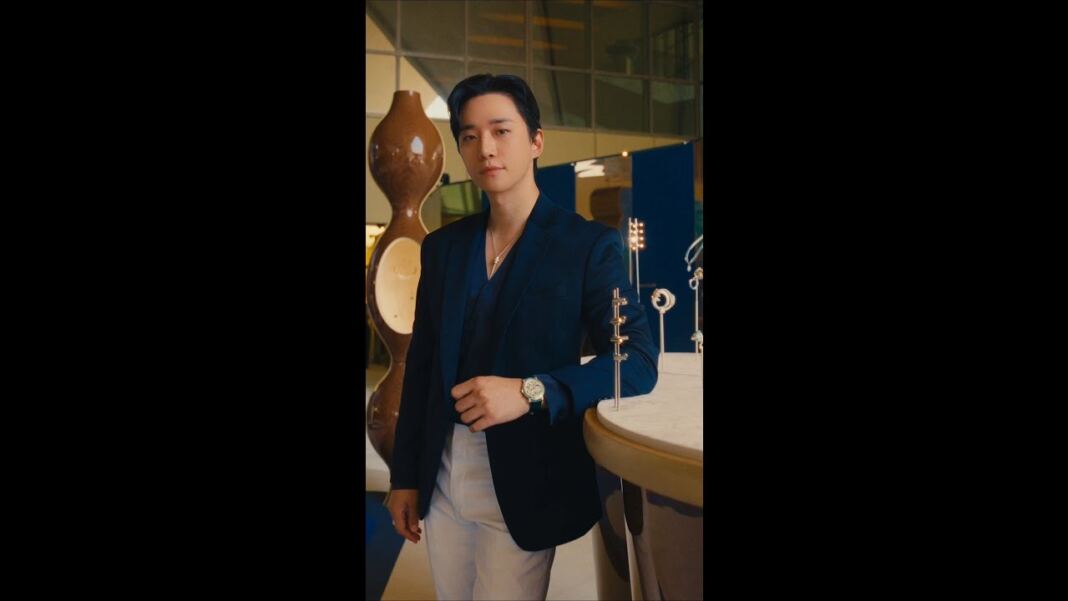
Gerald Charles Maestro 8.0 Squelette and Michael Strahan
Michael Strahan wore the Gerald Charles Maestro 8.0 Squelette, a Swiss skeleton watch that sits at the intersection of open-dial design and restrained finishing. The piece places its movement on full display through the dial and caseback—a design choice that demands calibre-grade decoration and finishing to justify the transparency. Strahan’s selection underscores Gerald Charles’s standing among collectors who prioritize construction clarity over dial complexity.
The Gerald Charles Maestro 2.0 Ultra-Thin now comes in a jade-dial edition reserved for Asia.
Skeleton Design and Transparency
The Maestro 8.0 Squelette removes the dial layer to expose the gear train, balance wheel, and escapement. The transparent caseback extends this visibility, allowing a continuous line of sight from front to rear. This approach originated in 19th-century pocket-watch manufacture and resurged in haute horlogerie during the 1990s. Gerald Charles executes this format with visible anglage on the bridges, circular-grained plates, and hand-finished components—details that separate a legitimate skeleton watch from a hollowed-out case.
Michael Strahan and Gerald Charles
Strahan’s association with the Maestro 8.0 reflects a deliberate brand alignment. The watch functions as a marker of personal taste—a choice that signals knowledge of construction-focused design over logo placement. For Strahan, a figure with established media and business presence, the selection carries no endorsement weight; it instead reflects individual preference for watches that reward extended examination.
The Gerald Charles Approach
Gerald Charles watches emphasize legible movement architecture and finishing standards. The brand resists trend-driven design, instead anchoring each model in observable calibre work. Owning a Gerald Charles piece commits a collector to appreciating what lies beneath the crystal—whether through magnified dial inspection or caseback study. For those interested in the full range, explore GERALD CHARLES collections to assess the construction philosophy across models.
Conclusion
Strahan’s choice of the Maestro 8.0 Squelette reflects a preference for watches where movement visibility serves as the primary design statement. Rather than masking complexity behind applied finishes, the skeleton format demands that every component meet finishing standards. The watch embodies the principle that construction is style—a premise Gerald Charles has held consistent across its output.
Frequently Asked Questions
What makes the Gerald Charles Maestro 8.0 Squelette special?
The Maestro 8.0 Squelette uses a skeleton format to expose the movement through both dial and caseback. This design choice requires high calibre-finishing standards, since every plate, bridge, and component becomes visible under magnification. The result is a watch where movement architecture functions as the primary aesthetic statement.
Why did Michael Strahan choose the Gerald Charles Maestro 8.0 Squelette?
Strahan’s selection reflects an appreciation for construction-focused design. The watch appeals to collectors who prioritize examining movement legibility and finishing detail over applied ornamentation or brand prominence on the dial.
What does choosing a Gerald Charles watch signify?
A Gerald Charles purchase indicates preference for transparent calibre philosophy. Owners commit to appreciating observable construction quality and finishing work—the foundation upon which each model’s design rests.