Key Highlights
- World’s thinnest automatic minute repeater tourbillon — Calibre 362 measures just 5mm thick
- 18K Pink Gold case, 41.4mm diameter, 8.25mm total height; limited to 10 pieces
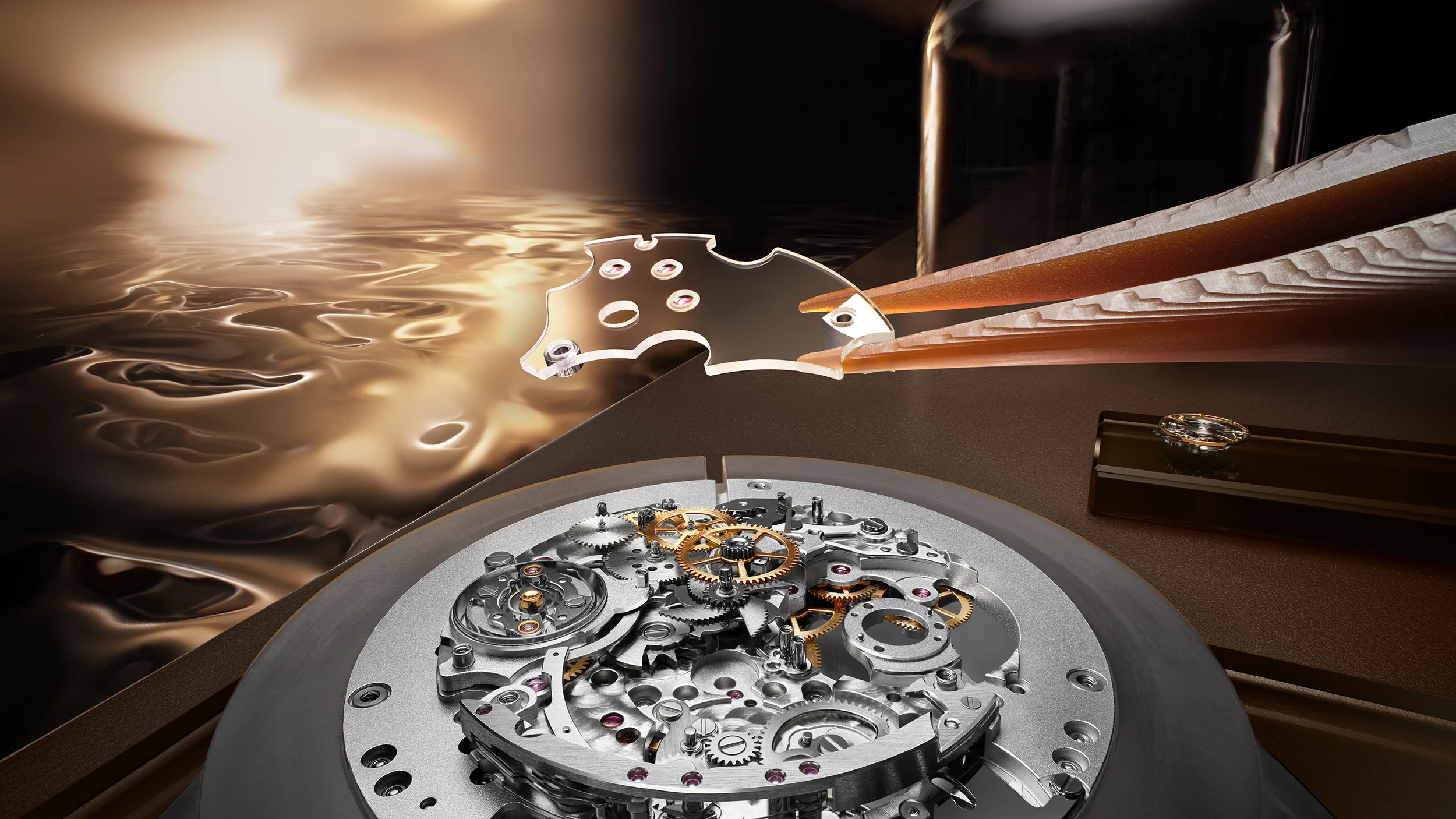
- Three structural bridges in transparent sapphire crystal for unobstructed movement visibility
- 593 components, 14 decorative finishing techniques, seven patents including six for Calibre 362
- Peripheral oscillating mass on 36 ceramic ball bearings adds zero thickness to the calibre
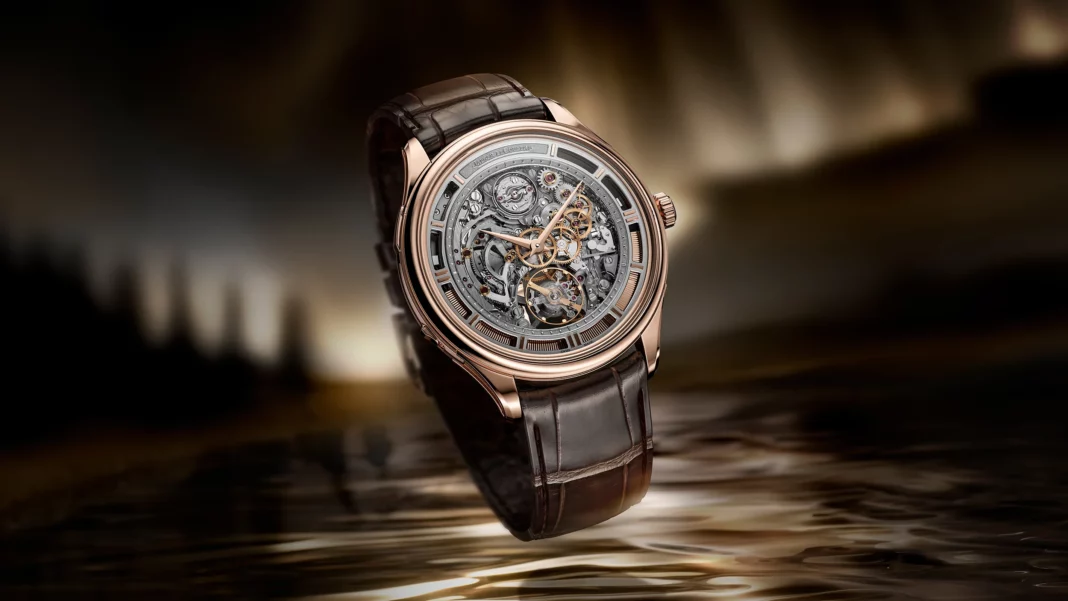
 Jaeger-LeCoultre Master Hybris Mechanica Ultra Thin Minute Repeater Tourbillon dial view showing open-worked movement and sapphire bridges” />
A Record Born From Integration
Jaeger-LeCoultre’s claim to the world’s thinnest automatic minute repeater tourbillon rests on a fundamental redesign of movement architecture. When Calibre 362 was conceived for 2014, the engineers at the Vallée de Joux refused the conventional approach of layering the striking mechanism atop a base movement. Instead, the repeater, the flying tourbillon and the winding system were each engineered as structural contributors to thinness—a calibre standing just 5mm tall as the result. The Master Hybris Mechanica Ultra Thin Minute Repeater Tourbillon is the definitive open-worked expression of that architecture, housed in an 18K Pink Gold case measuring 8.25mm thick and 41.4mm in diameter.
The minute repeater alone accounts for 187 of the calibre’s 593 components. Its striking mechanism was rebuilt to occupy minimal vertical space, with one-piece square-profile gongs for tonal purity and articulated trebuchet-style hammers delivering greater velocity and precision. A patented silent time-lapse reduction mechanism tightens the interval between hour and minute chimes. Jaeger-LeCoultre’s acoustic tradition reaches back to 1870, when the Maison produced its first minute repeater; more than 200 different repeating calibres have followed. For collectors who track Watches and Wonders closely, that lineage needs no elaboration—the Hybris Mechanica edition simply presents it in its most architecturally exposed form.
The Flying Tourbillon and Peripheral Rotor
The flying tourbillon comprises 59 components weighing 0.248 grams, suspended without an upper bridge. Both the patented S-shaped hairspring—developed specifically because the cage geometry demanded a novel spring form—and the full one-minute rotation remain completely unobscured. A cutaway in the base plate compounds the visual openness. The Master Control Chronometre reflects Jaeger-LeCoultre’s broader precision philosophy; Calibre 362 extends it into territory few movements reach.
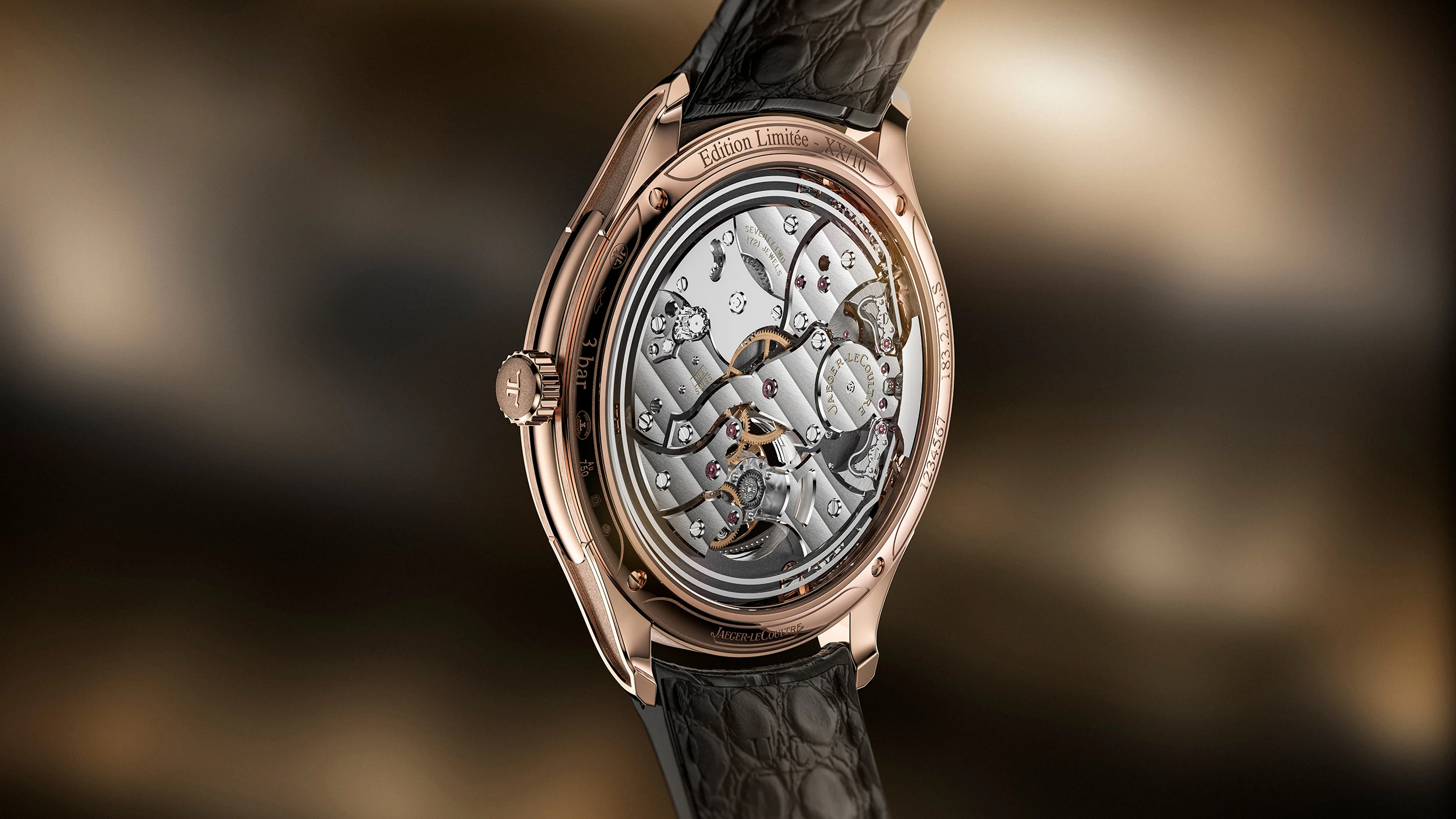
The peripheral oscillating mass encircles the movement’s outer edge on 36 specially conceived ceramic ball bearings, winding in both directions and contributing nothing to the calibre’s 5mm height. The movement’s interior remains fully visible from dial side and sapphire caseback alike. The guilloché peripheral rotor, produced in 18K Pink Gold within Jaeger-LeCoultre’s Métiers Rares™ ateliers, is as much decorative centrepiece as functional component.
Sapphire Bridges and Fourteen Finishing Techniques
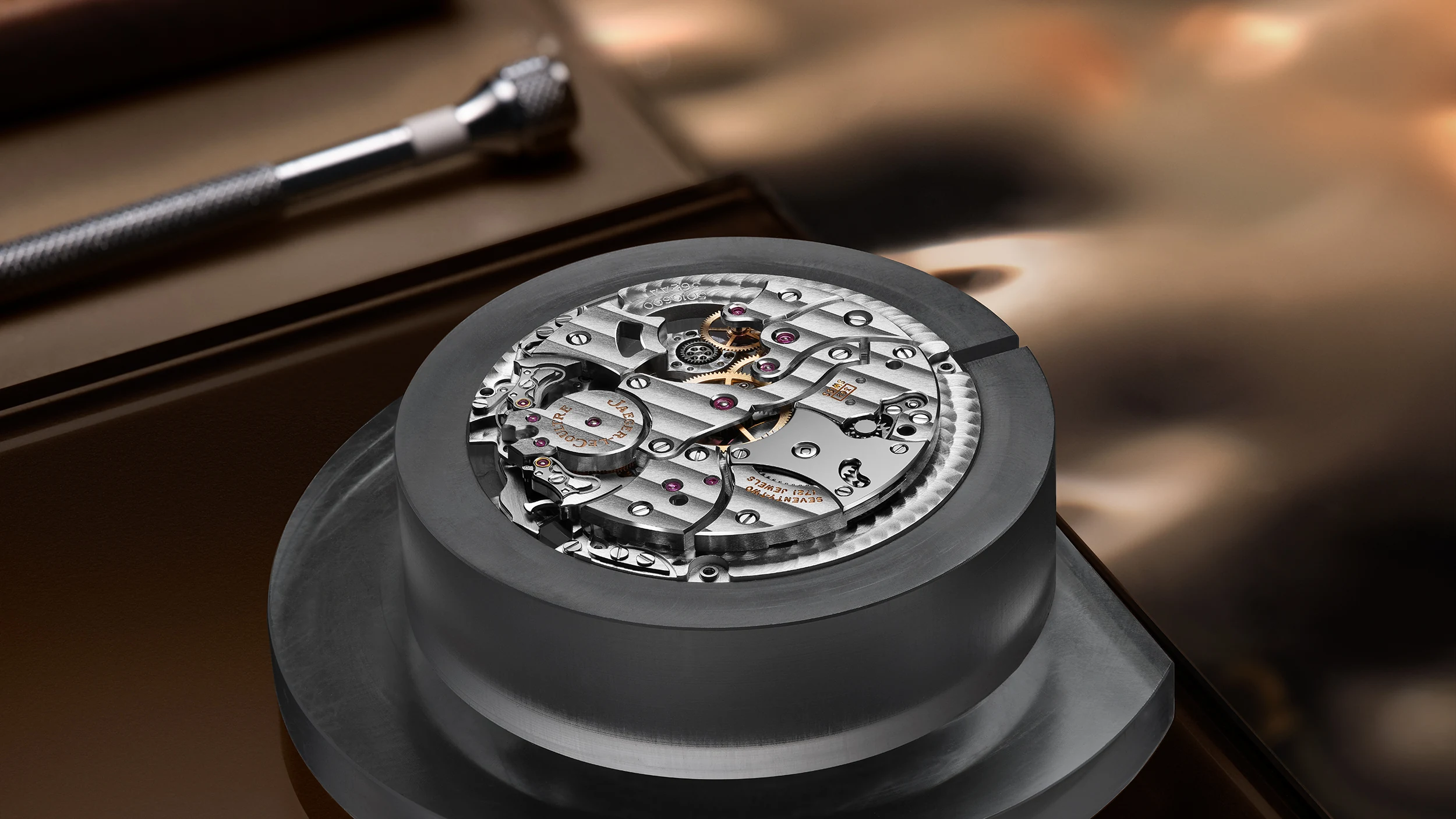
Skeletonisation alone was judged insufficient. Jaeger-LeCoultre fabricated three structural bridges entirely in transparent sapphire crystal—a technically demanding choice, given that direct jewel-setting into sapphire is not feasible. The solution: 18K Pink Gold chatons holding the 11 ruby jewels, simultaneously resolving the engineering problem and adding decorative refinement. Each sapphire bridge is polished, anti-reflective coated and anti-static treated for maximum clarity. Assembling the complete movement requires seven weeks.
Fourteen distinct surface finishes are applied across case and movement—sandblasting, perlage, Côtes de Genève, guillochage, diamond polishing and snailing among them. Forty-eight inner angles are hand-finished, as are 60 individually bevelled components. The dial is reduced to an open-worked ring of 18K White Gold framing the calibre, with applied hour markers and hands in 18K Pink Gold providing contrast against the mechanical landscape below. The 60-part case incorporates a patented retractable button at 10 o’clock to activate the repeater, paired with a locking button at 8 o’clock—a cleaner solution than the traditional slide for a case profile this slim. The full collection context is available on the Jaeger-LeCoultre official site.
Specifications and Edition
Reference Q13125S2 is limited to 10 pieces, placing it among the rarest expressions in the current Hybris Mechanica family. The peripheral winding system delivers a 42-hour power reserve, and the watch carries a 30-metre water resistance rating. It is worn on a brown alligator leather strap with an 18K Pink Gold pin buckle. The Maison has accumulated more than 430 patents since Antoine LeCoultre opened his first atelier in 1833; the six developed specifically for Calibre 362 are among the most consequential, each addressing a problem no prior calibre had needed to solve.
Why It Matters for Middle East Collectors
At the top of the Gulf market, two attributes consistently command the highest premiums: acoustic complication and architectural transparency. The Master Hybris Mechanica Ultra Thin Minute Repeater Tourbillon delivers both without compromise. Ten pieces globally means acquisition requires active pursuit, not passive consideration. Calibre 362’s record, grounded in six dedicated patents and close to two centuries of manufacture depth, gives it a technical provenance that withstands the most rigorous scrutiny.
Discover the watches shaping the Middle East market. Join our mailing list for ongoing reviews, releases, and collector insights.
Frequently Asked Questions
What makes the Jaeger-LeCoultre Master Hybris Mechanica Ultra Thin Minute Repeater Tourbillon the world’s thinnest automatic minute repeater tourbillon?
Jaeger-LeCoultre redesigned each complication from the ground up, integrating the striking mechanism, flying tourbillon, and winding system as structural contributors to thinness rather than layering them on top of a base movement. The resulting Calibre 362 measures just 5mm thick, achieving a total watch height of 8.25mm in its 18K Pink Gold case.
How does the peripheral oscillating mass in Calibre 362 differ from a conventional automatic rotor?
Rather than using a central rotor that adds height, Calibre 362 employs a peripheral oscillating mass that encircles the movement’s outer edge on 36 ceramic ball bearings, winding freely in both directions. This design contributes zero additional thickness to the calibre while leaving the movement’s interior fully exposed.
What acoustic innovations were made to the minute repeater mechanism in this watch?
The striking mechanism was entirely re-engineered with one-piece square-profile gongs optimised for tonal purity and articulated trebuchet-style hammers that strike with greater velocity and precision. A patented silent time-lapse reduction mechanism minimises the pause between hour and minute chimes, ensuring a fluid acoustic sequence.