What Makes It Special
- Czapek & Cie marks ten years since its 2015 rebirth at SalonQP London, where the Quai des Bergues won the Public Prize at the Grand Prix d’Horlogerie de Genève the following year.
- Ten calibres across five collections define a decade of technical evolution, from the partnership-developed SXH1 to the fully in-house Calibre 10.
- The Antarctique collection, launched in May 2020, became the brand’s commercial turning point; early limited editions sold out within days and drove a backlog exceeding 2,000 pieces by end of 2022.
- Calibre 10 opens the second decade as a platform for integrated complications, with Calibre 10.1 combining a central jumping hour and peripheral trailing minutes in a half-hunter case.
- Czapek‘s philosophy of étblissage, selective collaboration over full vertical integration, remains central to its creative independence.
A Name Recovered, Then Reinvented
François Czapek, born František Čapek in Bohemia in 1811, trained in Poland and arrived in Geneva as a 21-year-old refugee in 1832. He later partnered briefly with Antoni Patek before establishing his own atelier in 1845, crafting technically distinguished pieces for the French imperial court and European elite. When he retired in the mid-1860s, the name faded entirely, for nearly 150 years.
The modern chapter began in 2012, when Harry Guhl and Xavier de Roquemaurel acquired rights to the Czapek name and, with watchmaker Sébastien Follonier, began building a contemporary Maison. Their mandate was specific: draw inspiration from François Czapek’s design principles and rebellious spirit, but produce no relics. Haute horlogerie in a modern spirit, traditional expertise fused with contemporary thinking, aesthetically and technically.
To finance the venture without surrendering creative control to venture capital, the founders chose equity crowdfunding, unprecedented in the luxury industry. When Baselworld 2016 produced enthusiasm but almost no orders, another unconventional move followed: direct online sales. The result exceeded annual targets.
Ten Calibres, One Language
The technical progression of Czapek’s decade is best read through its calibres. SXH1, conceived as a contemporary tribute to pocket watch No. 3430 of the 19th-century house, established the asymmetric register positions, complications at 7:30 and 4:30 rather than the conventional 9–3 axis, that would become a house signature. SXH2 arrived as a counterpoint: a suspended tourbillon with a second time zone displayed on the dial side, taking the brand from present to future in a single movement.
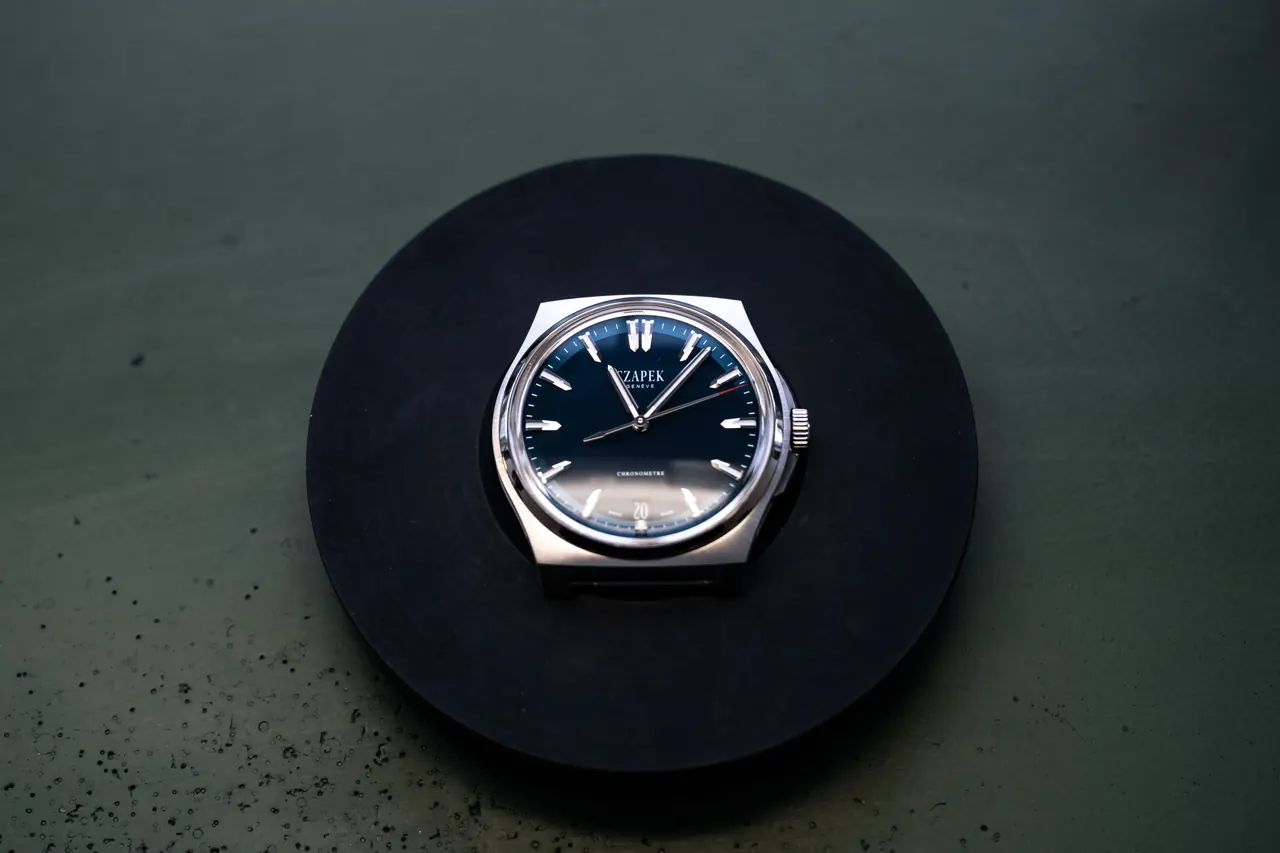
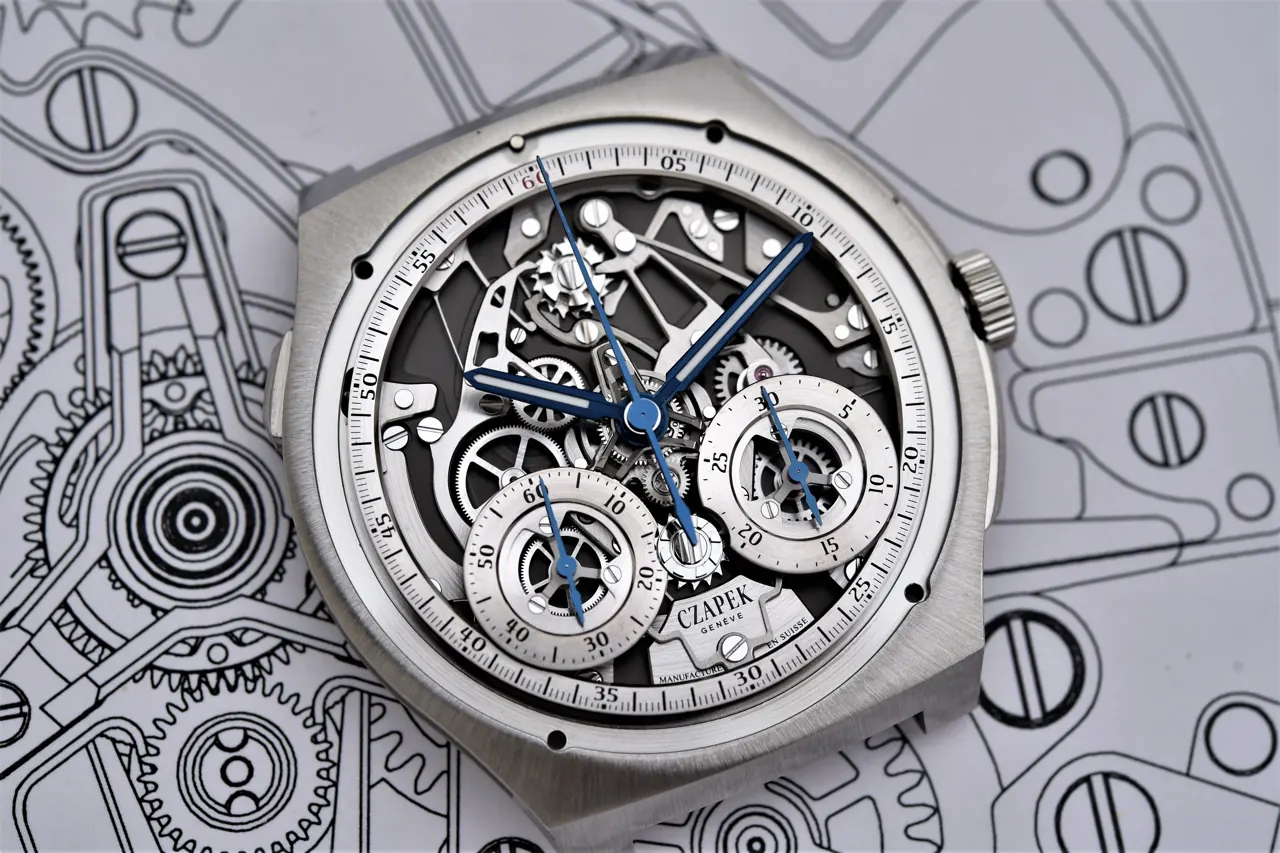
SXH5, designed entirely in-house for the Antarctique collection in 2020, marked the technical turning point. Its architecture of seven skeletonised bridges and a micro-rotor in recycled platinum was conceived to satisfy sports-watch performance criteria and lay the gear train bare for inspection simultaneously. The following year’s SXH6, the Antarctique Rattrapante, went further: an “upside-down” movement placed the chronograph clutch, reset cams and levers on the dial side, mechanics arranged as spectacle rather than concealed beneath it.
Calibre 8, introduced in the Place Vendôme Complicité at the end of 2023, deployed a rare double escapement co-created with master watchmaker Bernhard Lederer, in which two independently beating balance wheels cancel out rate variations via a differential. Calibre 9, machined mostly in-house and introduced in early 2025, reconciled the lightness of a flying tourbillon with the Antarctique’s sporty architecture; gear train, barrel and tourbillon appear to float above the main plate.
Calibre 10 and the Second Decade
Calibre 10 is designed not as a single movement but as a platform; each future complication iteration is re-engineered from the ground up rather than added as a module. The first expression, Calibre 10.1, pairs a central jumping hour for 24 hours with trailing minutes on a peripheral disc, housed in a case with a half-hunter cover that reads as playfully retro-futuristic without tipping into nostalgia.
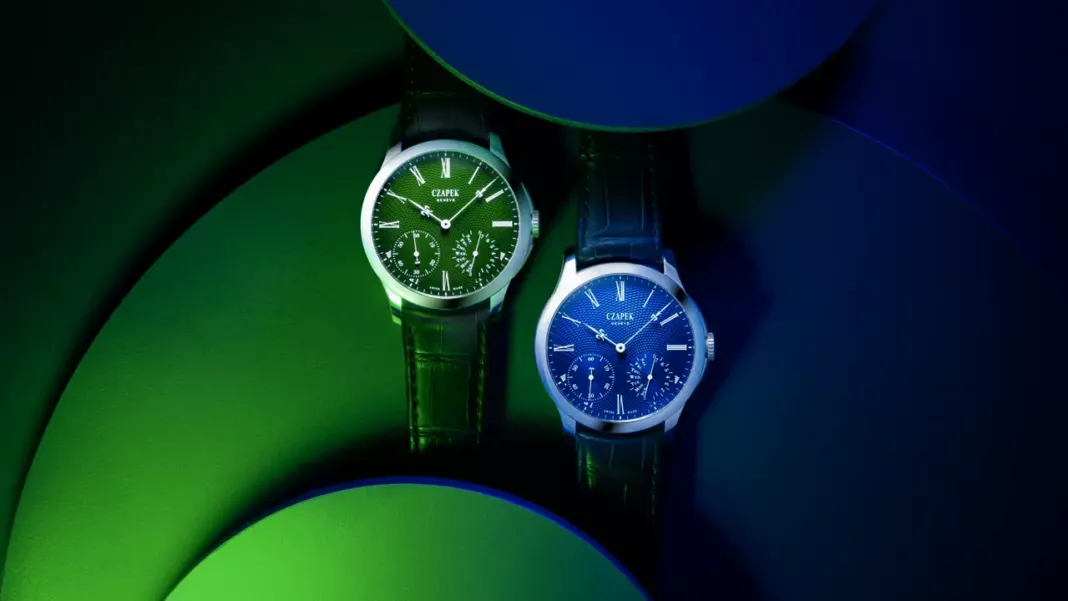
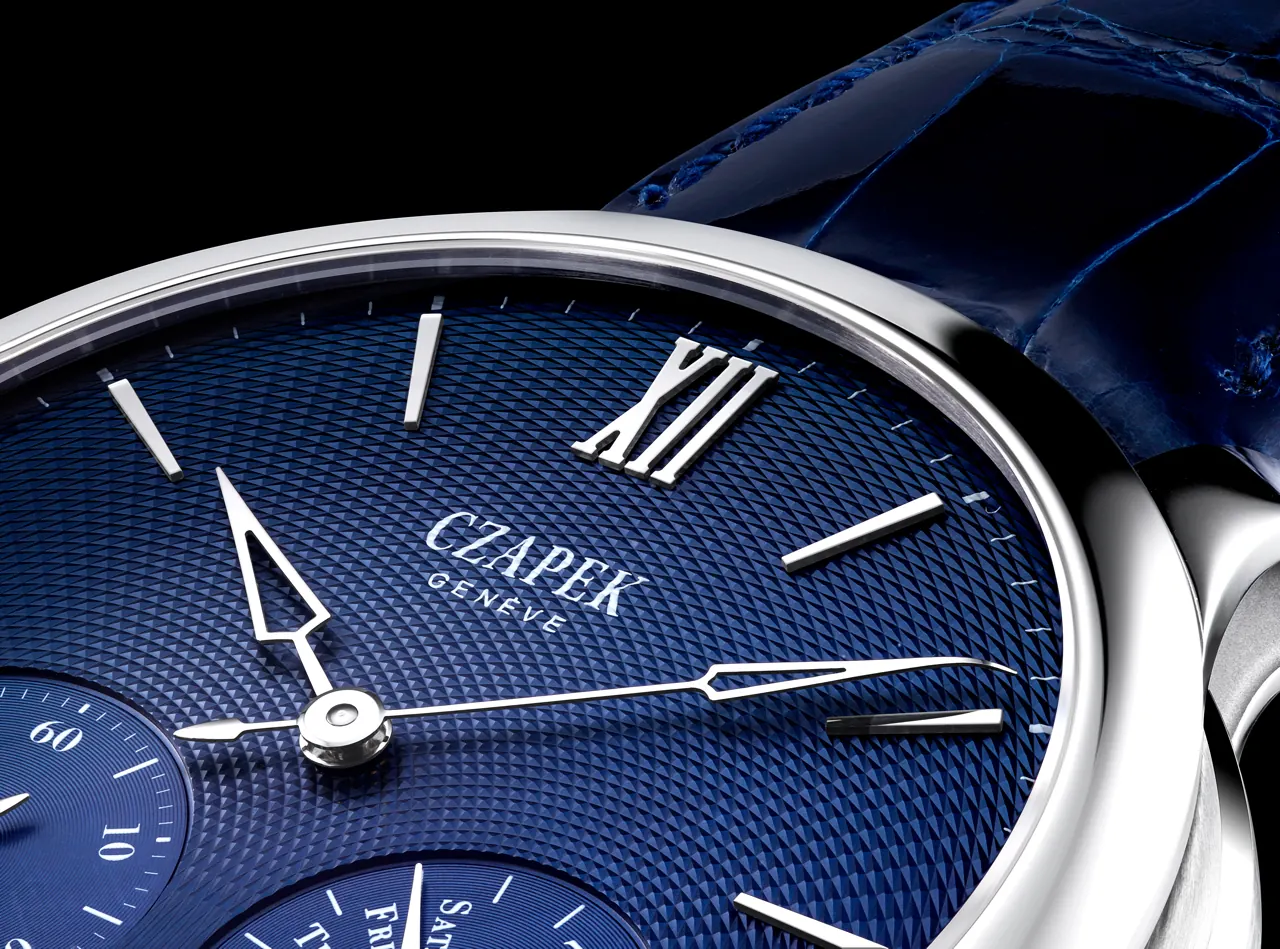
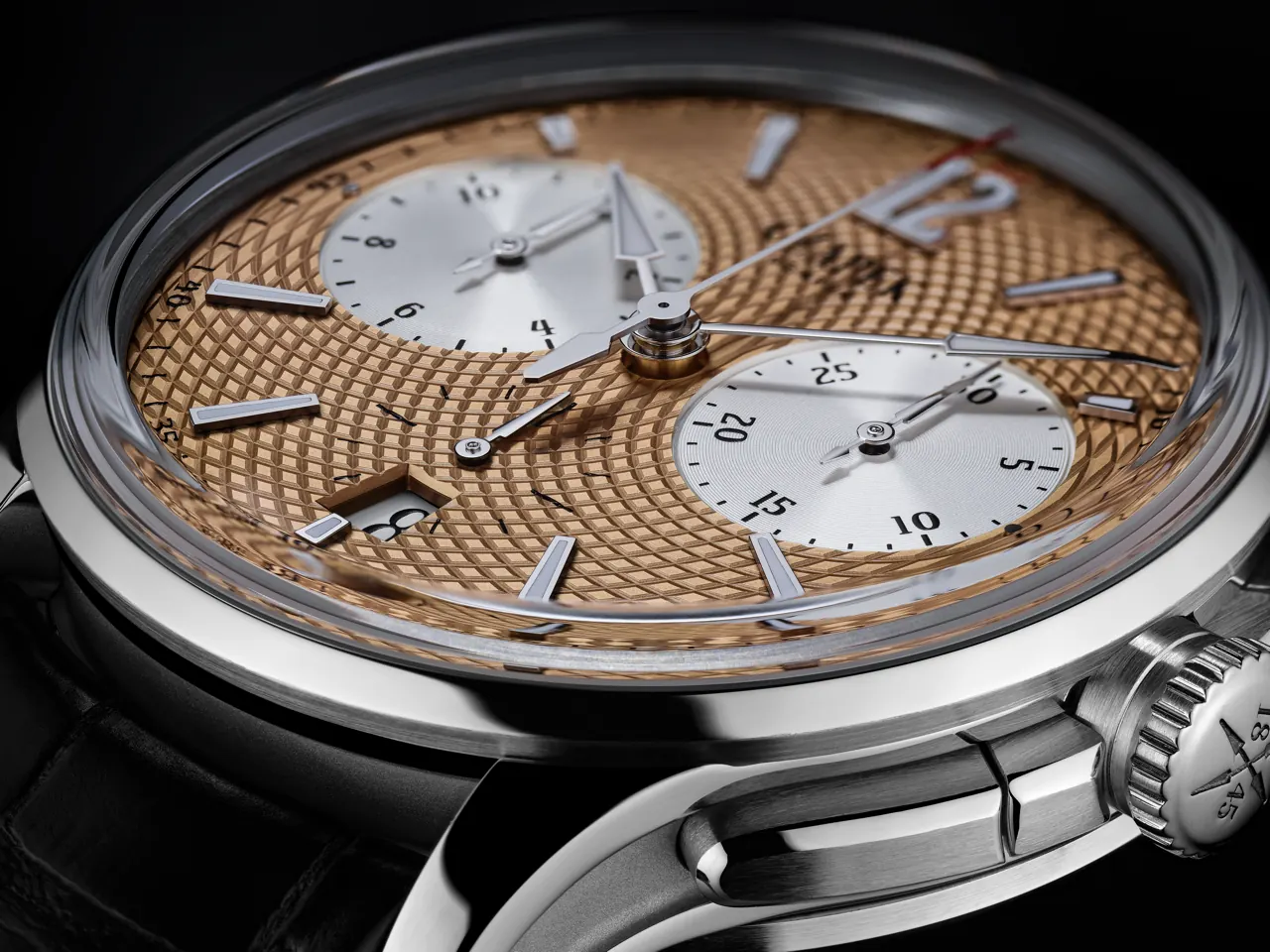
The design language tying all ten calibres together draws on three-dimensionality, the contrast of open and closed volumes, and a specific tension between symmetry and imbalance inherited from the 19th-century pocket watches. Guilloché dials, finishes ranging from lamé to osmium, and a “no rules” colour palette handled by partners Metalem, Donzé Cadrans and MD’Art extend that language to the dial surface. The result is a breadth of faces, each with a distinct character, that itself constitutes a design signature.
The motto “We Collect Rare People,” introduced in 2019, frames the community that sustains this model: shareholders who backed an untested venture, specialist partners contributing savoir-faire that resists watchmaking orthodoxy, and collectors drawn less to status signalling than to the Latin root of luxury, lux, light and clarity. As Xavier de Roquemaurel has stated, Czapek treats creativity as something better shared than owned; a philosophy made visible in every calibre the Maison produces.
Stay ahead of the latest releases. Subscribe to our newsletter for editor-curated coverage of luxury timepieces across the Middle East.
Frequently Asked Questions
How many calibres has Czapek produced since its rebirth in 2015?
Czapek has developed 10 calibres over its first decade, represented across five distinct collections. Each calibre carries a shared design language rooted in asymmetry, three-dimensional architecture and the visual display of mechanical elements.
What is Czapek Calibre 10 and what makes it significant?
Calibre 10 opens Czapek's second decade as the foundation of a new series of in-house automatic movements designed to host various complications. Unlike modular solutions, every future evolution of Calibre 10 will be entirely re-engineered to fully integrate each complication. Its first iteration, Calibre 10.1, combines a central jumping hour display for 24 hours with trailing minutes on a peripheral disc.
Where is Czapek's manufacture located?
Czapek operates its own manufacture in La Chaux-de-Fonds, Switzerland, which the brand established as its production base after its early years of growth. The Geneva flagship boutique, opened in 2019, sits close to the original 19th-century atelier of François Czapek.
What was the first calibre Czapek developed entirely in-house?
Calibre SXH5, designed for the Antarctique collection and introduced in 2020, was the first calibre conceived and designed entirely in-house. Calibre 9, introduced at the beginning of 2025, went further still — designed, constructed and machined mostly in-house.
Who founded modern Czapek & Cie?
The modern Czapek & Cie was established after entrepreneurs Harry Guhl and Xavier de Roquemaurel acquired rights to the Czapek name in 2012, later joining forces with watchmaker Sébastien Follonier — whose initials, alongside theirs, form the SXH nomenclature of the first seven modern calibres.
Explore more from CZAPEK: CZAPEK Promenade Goutte de Rosée: Inside the Green Enamel Dial · CZAPEK collection.