The Short Version
- Chanel’s Fall/Winter 2026 Haute Couture collection, titled “Gaby and the Beanstalk,” is Matthieu Blazy’s second couture show for the Maison, comprising 63 looks presented on 7 July 2026 in the upper salon of the Grand Palais, Paris, drawing on a Charles Perrault fairy-tale book discovered in Gabrielle Chanel‘s personal library to reframe the founder’s life as its own Cinderella-like transformation.
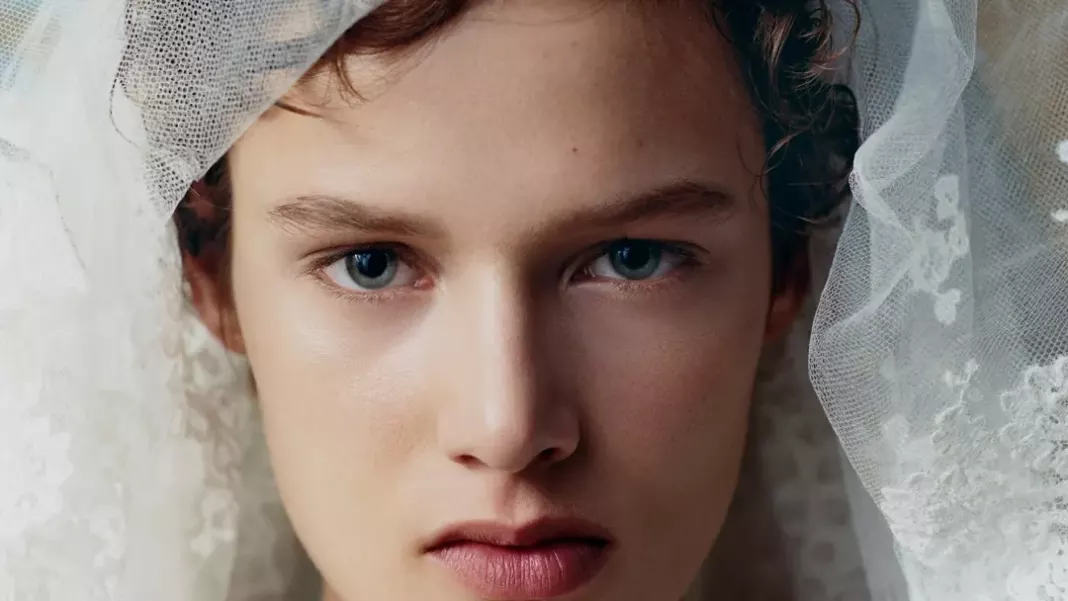
- The show replaced the customary bridal finale with a Little Black Dress, a deliberate biographical statement from Blazy.
- Every silk lining was individually painted with Perrault fairy-tale illustrations, visible only to the woman wearing the garment.
- Six Métiers d’Art ateliers contributed, from Lesage embroidery to Massaro’s pea-pod and beanstalk heels.
The Story Behind It
A small leather-bound volume on Gabrielle Chanel’s library shelves became the conceptual foundation for an entire haute couture season.
During a visit to the founder’s personal library, Blazy encountered Charles Perrault’s Les Fées, Contes des Contes. The question it prompted was direct: “I started to wonder, was Gabrielle Chanel’s life a fairytale?” Rather than treat her biography as received legend, he drew equally on its harder edges — her documented habit of ripping sleeves apart with nail scissors on live models, working close enough to draw blood. “There are pictures of Gabrielle — she’s not pinning, she’s attacking the fabric. Ripping the sleeve,” Blazy noted backstage. The collection’s title, Gaby and the Beanstalk, frames her rise from a convent orphanage to the founder of one of history’s most powerful fashion houses as its own act of fairytale re-authorship.
The Craft
Every stitch in this collection carries narrative weight.
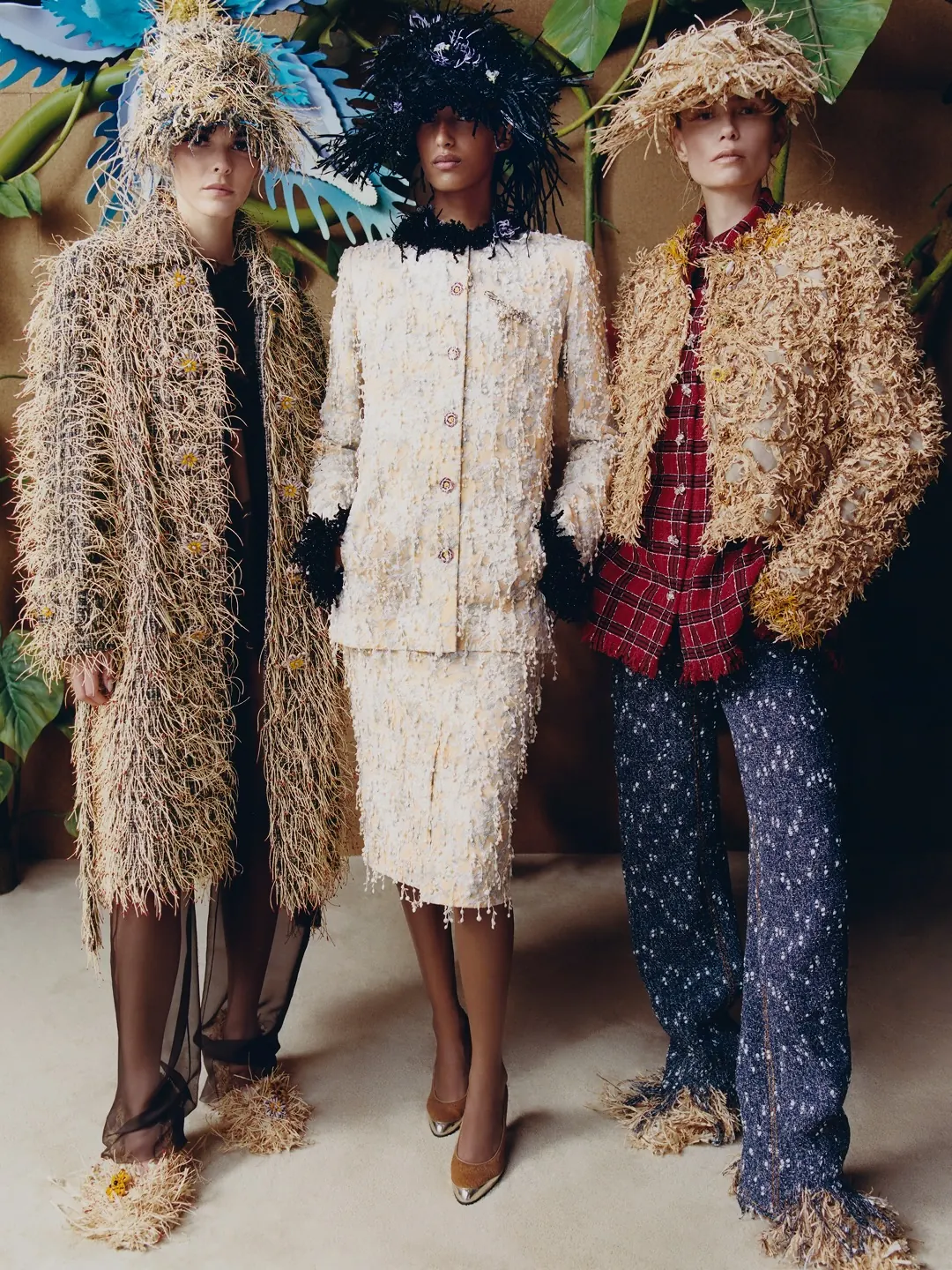
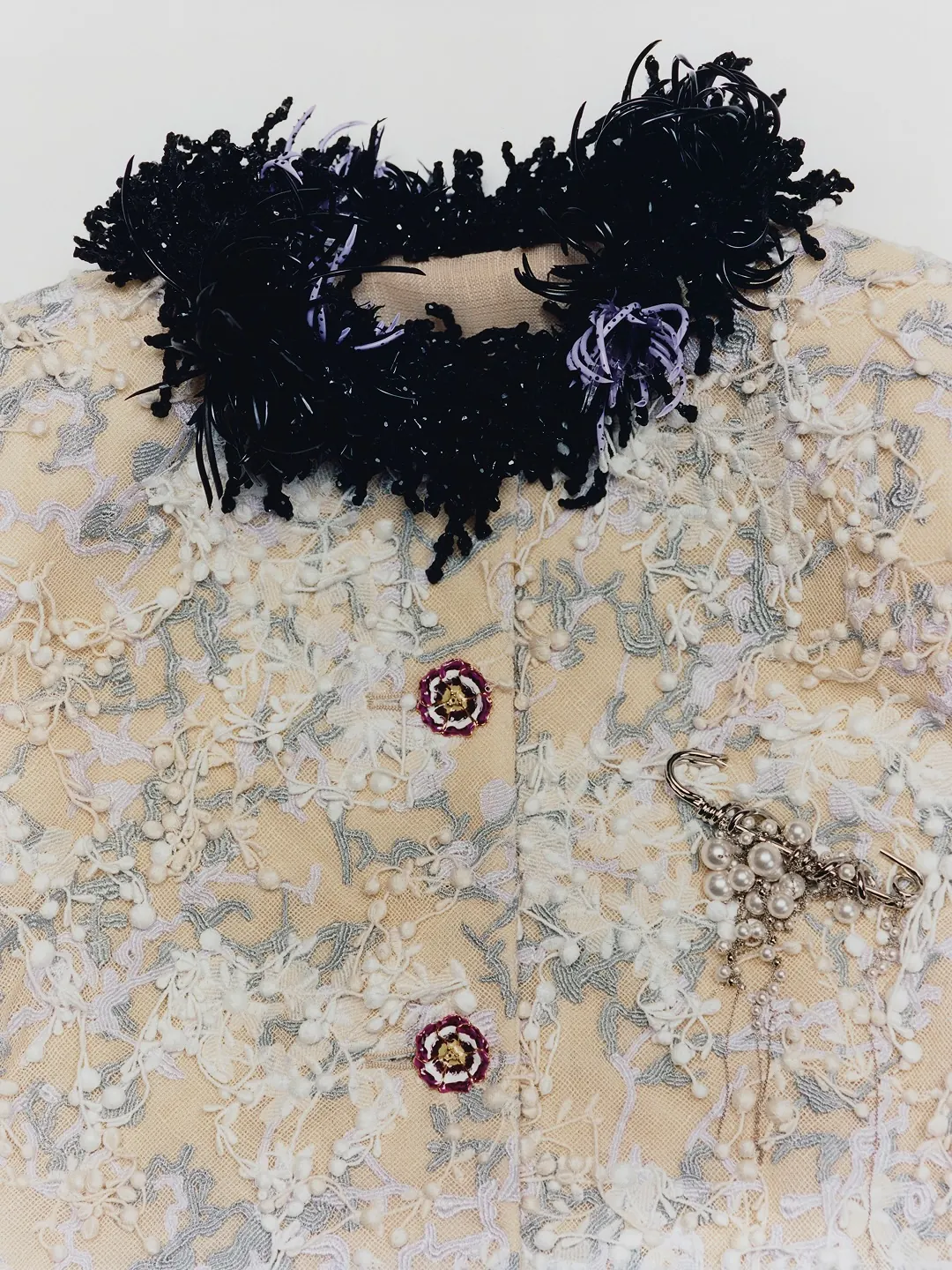
Three looks anchored the full range. A raffia scarecrow jacket, cropped and textured, was layered over frayed tartan and beaded trousers shaped like denim. Guipure suits carried three-dimensional magic beans across their surfaces; vine embroidery climbed lilac linen shift dresses; shredded tweed bloomed into flowers along dress surfaces. The finale was a Little Black Dress, not a bride. As Blazy explained afterwards: “A wedding wasn’t Chanel’s fairy tale, because she was never married.”
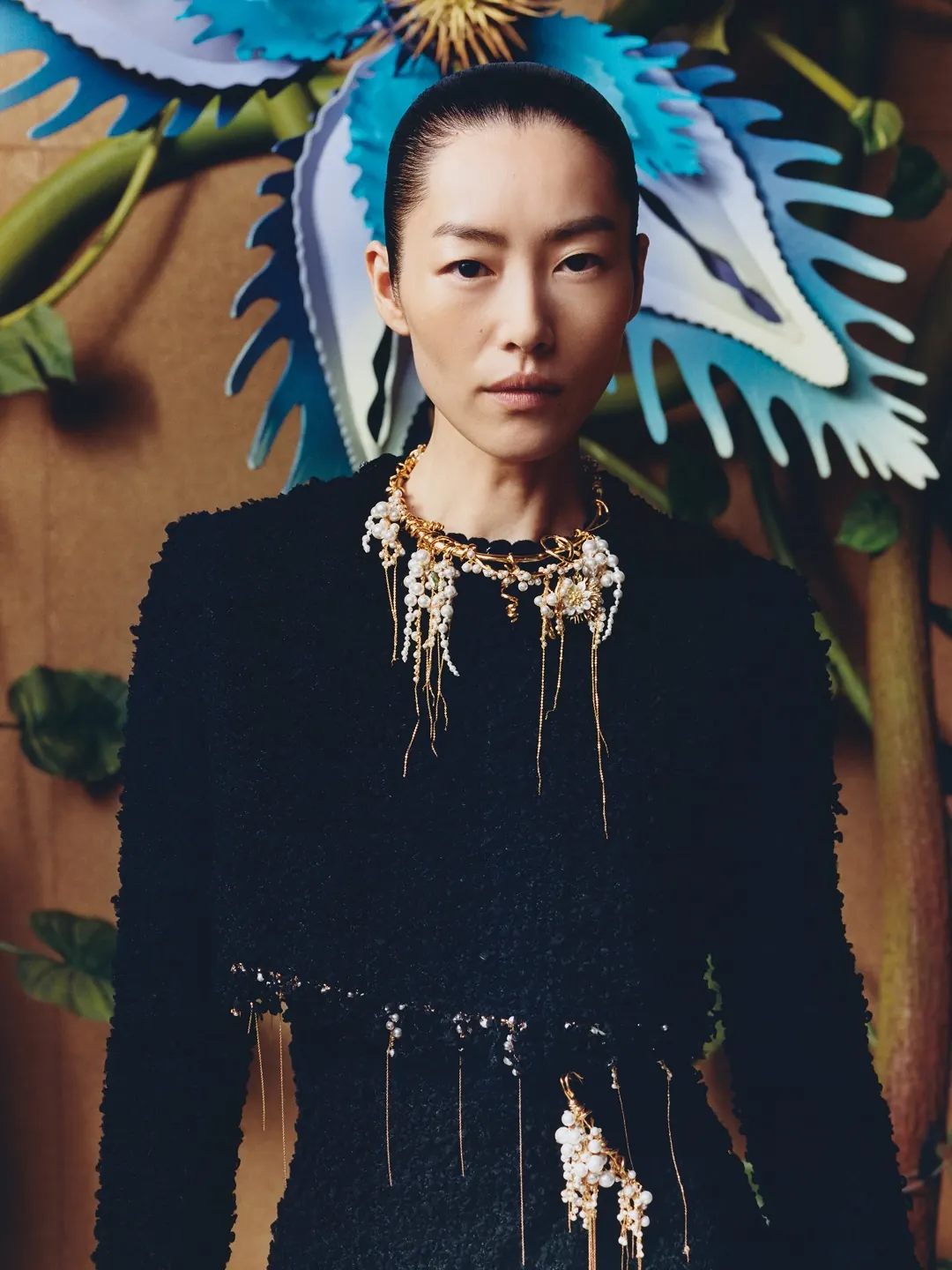
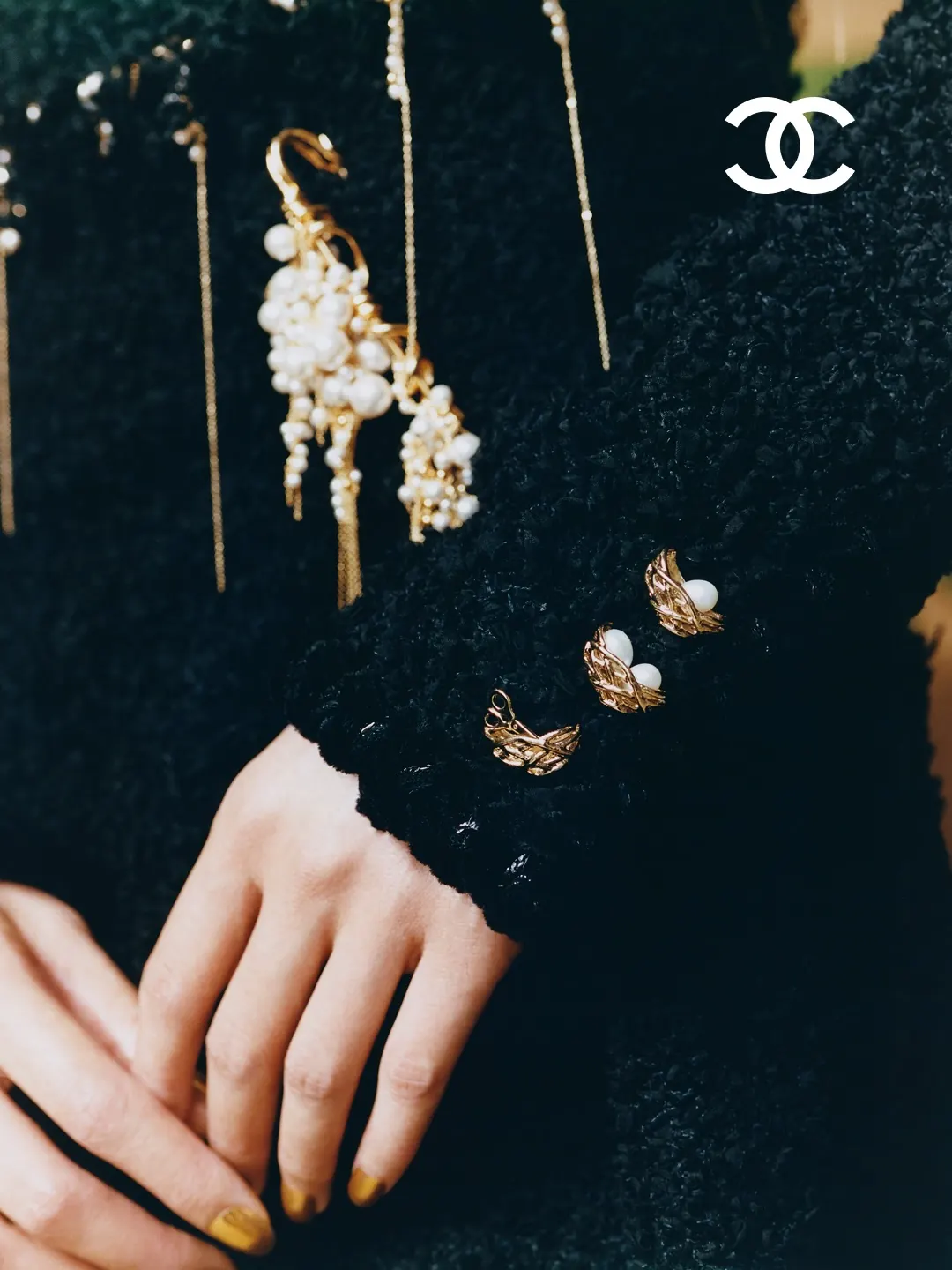
Perhaps the most discussed construction detail: coats hacked apart at the midriff, raw edges then embroidered with filigree gold chains and beading. Critics described the technique as “couture kintsugi” — fabric injuries mended with visible gold repair, a direct homage to Gabrielle’s own destructive-creative working method. Chanel’s iconic chain hems, traditionally sewn inside jackets as weighting, were moved to outer edges and fitted with small charms, functioning as jewellery in their own right.
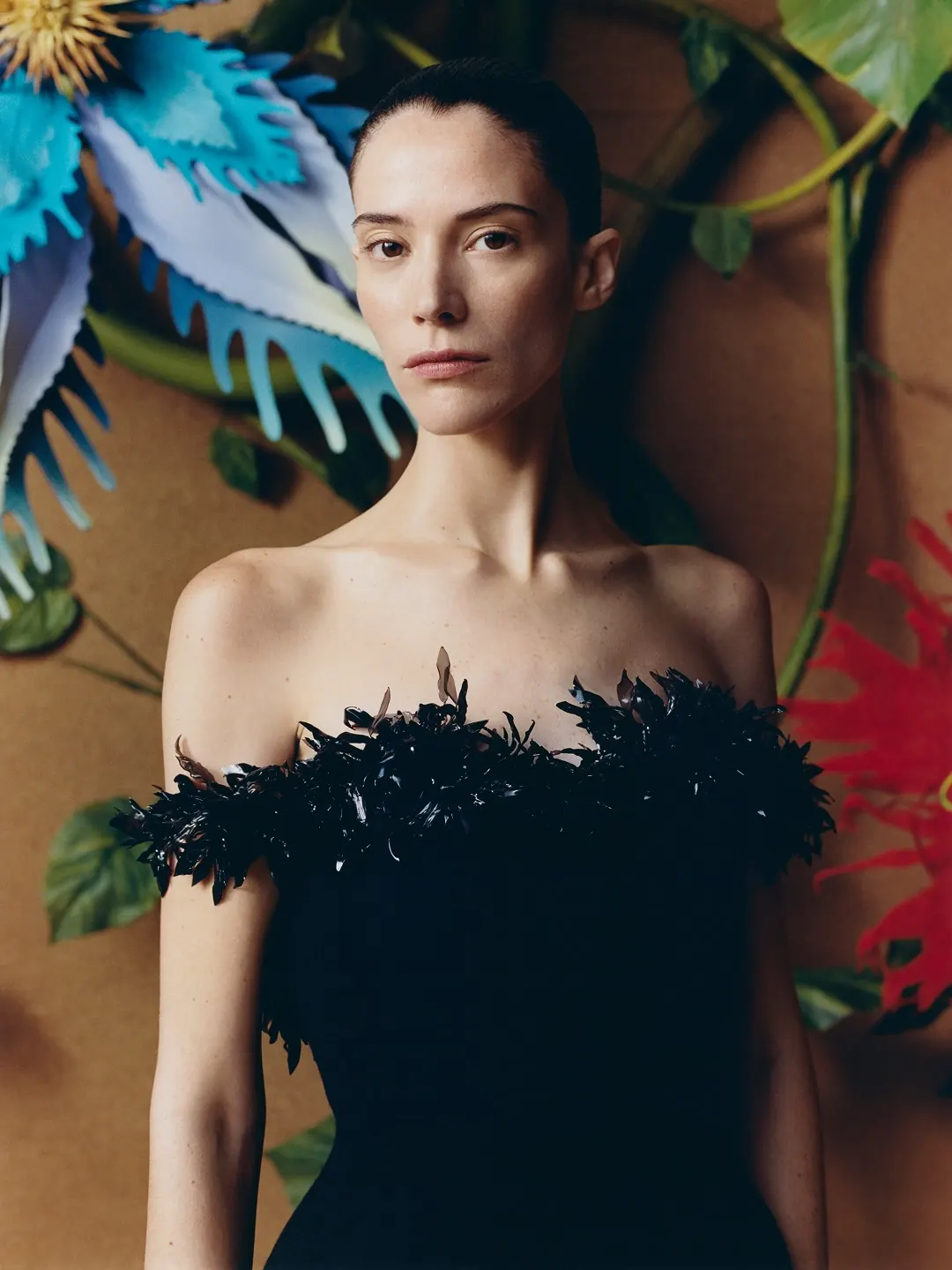
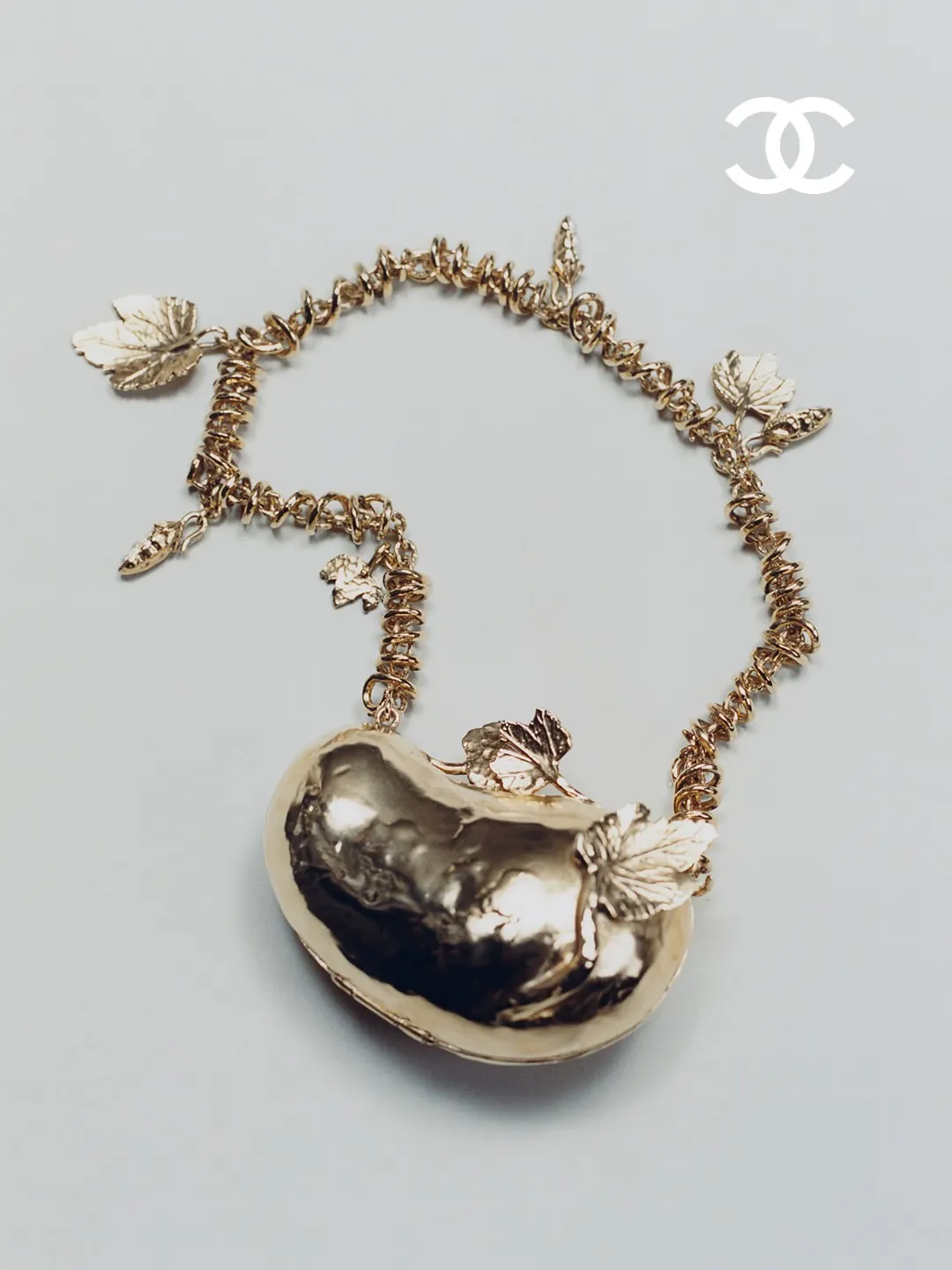
The physical realisation of 63 such dense looks required the full deployment of Chanel’s Métiers d’Art network: Lesage and Atelier Montex for beading and embroidery, Maison Michel for hats, Massaro for sculptural story-book heels cast as pea pods and golden eggs, Goossens for chains and metal ornaments, and Atelier Paloma Paris for feather work.
On the Body
For all its narrative theatricality, the collection wore with genuine ease.
Tweed separates were offered in a softer, lighter register. Dresses gained ease through drop-waist construction. Blazers borrowed loose tailoring from menswear. Pastel silk mousseline returned from the SS26 collection in toothpaste green, pale pink, and flesh-toned beige. Blazy’s own framing was precise: “Haute couture at Chanel is not just a fairy tale; in essence it is for women, their realities and their adventures of the everyday.” Bruno Pavlovsky, President of Fashion and President of Chanel SAS, reinforced the point: “It’s been a long time since I’ve found haute couture this exciting. What fascinates me is the way it’s been restored to the unique positioning that sets it apart even further from ready-to-wear.”
Where It Sits in the Chanel Line-up
Blazy’s sophomore couture season confirms a creative position, not merely a debut energy.
His first outing introduced a craft-first, storybook visual language; this collection expanded it with shredded tweeds, painted linings, and the kintsugi repair technique, while retaining the same intimacy. The miniaturist philosophy Blazy articulated backstage — “Chanel couture is not about the big ‘wow.’ Chanel couture is about the details. If people think that couture is a big painting, I think maybe at Chanel, it’s more like a miniature” — now reads as a settled house position rather than a newcomer’s statement. Every silk lining, painted individually with Perrault fairy-tale illustrations and visible only to the woman inside the garment, captures that register precisely. Explore the full collection at chanel.com.
For more on the collections shaping luxury fashion coverage in the Middle East, sign up for our weekly editorial briefing.
Frequently Asked Questions
What is Chanel's Gaby and the Beanstalk collection?
Gaby and the Beanstalk is Matthieu Blazy's second haute couture collection for Chanel, comprising 63 looks shown on 7 July 2026 in the upper salon of the Grand Palais, Paris. The collection draws on a copy of Charles Perrault's Les Fées, Contes des Contes found in Gabrielle Chanel's personal library, framing her life as a fairytale re-imagined through botanical embroidery, kintsugi-technique coats, and a Little Black Dress finale.
Who is Matthieu Blazy and what is his role at Chanel?
Matthieu Blazy is a French-Belgian designer who holds the title of Artistic Director of Fashion Activities at Chanel. Gaby and the Beanstalk, shown in July 2026, was his second haute couture outing for the Maison following less than a year in the role.
Which Chanel ateliers contributed to the FW26 Haute Couture collection?
The collection mobilised Chanel's full Métiers d'Art network via the Le19M hub in Paris. Contributing ateliers included Lesage and Atelier Montex for embroidery and beading, Maison Michel for hats, Massaro for sculptural heels, Goossens for chains and charms, and Atelier Paloma Paris for feather work, alongside Chanel's own tailleur, flou, and galon ateliers.
Why did the Chanel FW26 show close with a Little Black Dress rather than a bridal look?
Matthieu Blazy deliberately replaced the customary bridal finale with a Little Black Dress as a biographical statement. As he explained backstage: "A wedding wasn't Chanel's fairy tale, because she was never married." The LBD, originally established by Gabrielle Chanel herself, was chosen as the truest tribute to a woman who found fulfilment in creation rather than matrimony.
Is the Chanel FW26 Haute Couture collection available to view online?
The full collection can be viewed at chanel.com, the brand's official website, where Chanel publishes its haute couture look books and show documentation.
Explore more from CHANEL: 1957—a CHANEL composition. · 1957—a CHANEL composition..