
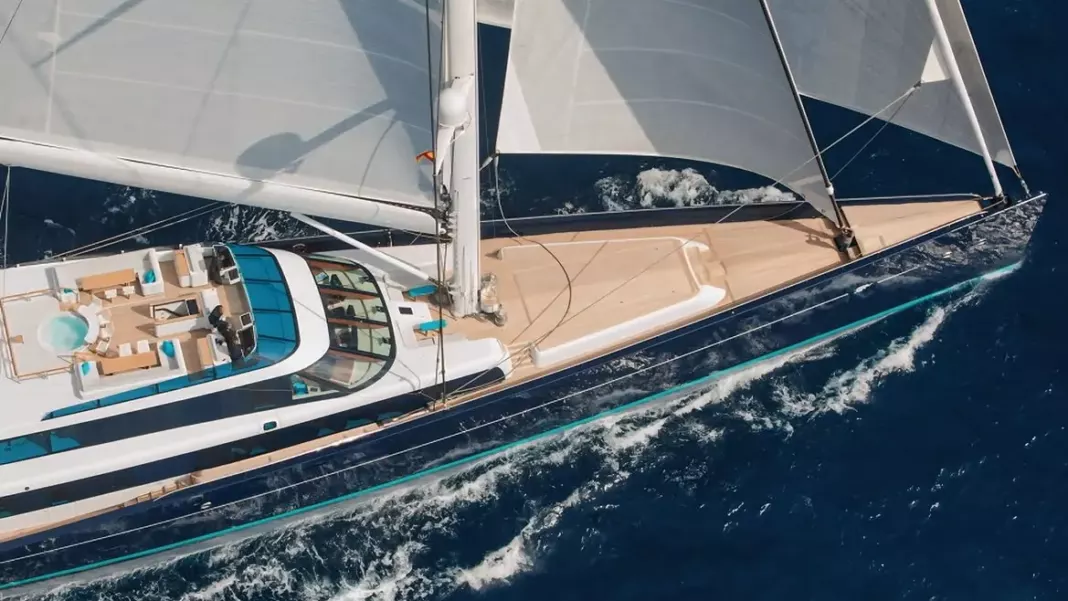
Key Highlights
- 85.9 metres overall length — the world’s largest ketch and the second-longest modern sailing yacht ever launched
- Joint construction by Oceanco (Alblasserdam) and Vitters (Zwartsluis), two Dutch shipyards each leading in their discipline
- Naval architecture and exterior by Tripp Design; interiors by Dölker + Voges across four decks
- Custom “sketch” rig with twin masts rising close to 90 metres; approximately 3,200 m² of working sail, 5,000 m² with Code 1
- Recorded 20.4 knots under sail during maiden season in Greece
- Beach club below deck with glass ceiling, central pool, steam room, sauna, and ocean-view Jacuzzi
- 12 guests across seven staterooms; crew of up to 17
- Delivered March 2016; sold in 2023 via Edmiston and Y.CO
Signature Features
A sailing yacht of this dimension forces a fundamental choice: engineering integrity or sailing purity.
Aquijo refused the compromise. At 85.9 metres, 1,575 tonnes of displacement, and with a hull in high-tensile steel topped by an aluminium superstructure, she was built under project name P85, Hull No 3069 for Vitters and Y711 for Oceanco, with construction beginning in late 2012 and delivery following in March 2016. The decision to assign one hull to two separate yards, each authoritative in its own domain, was made before the keel was laid, and it defined everything that came after.
The Rig: A Category of One
Bill Tripp named the configuration himself, because no existing term was precise enough.
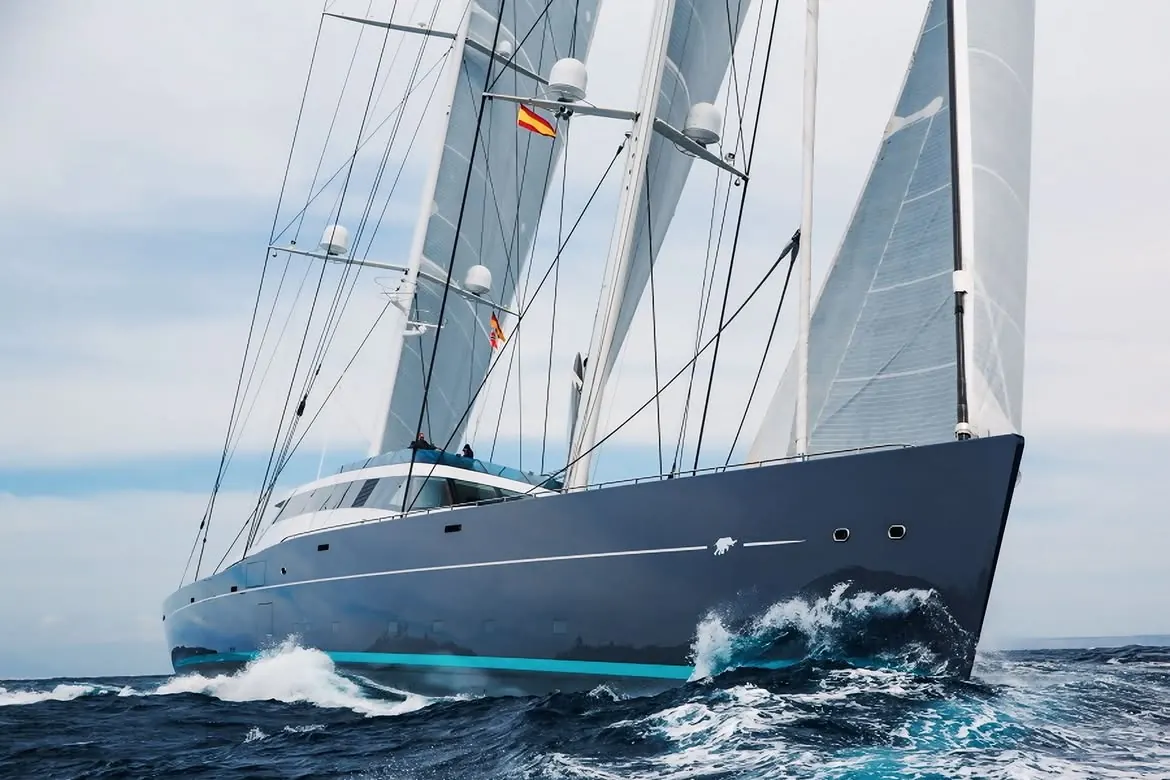
American naval architect Bill Tripp, whose practice operates from Connecticut and Amsterdam, designed the exterior, hull lines, and rigging. The two masts rise close to 90 metres, with the mizzen standing only 1.5 metres shorter than the main, close enough that Tripp coined the term “sketch” (a hybrid of schooner and ketch) to describe it. Working sail area sits at approximately 3,200 m² of North Sails 3Di laminate; deploy a Code 1 on reaching courses and that figure climbs to roughly 5,000 m².
Tripp’s rigging logic was load-equalisation: main, mizzen, and jib were engineered to carry comparable forces, all targeted at a figure the team was confident could be handled safely. Shrouds, winches, and jib sheets were custom-made throughout, because nothing off-the-shelf existed at the required scale. That discipline produced a yacht that hit 20.4 knots in 30–40 knot winds during her maiden Greek season, cruising at an average of 19 knots.
Engineering & Steering
The loss of feel is the quiet problem that afflicts every very large sailing yacht.
As hull size grows, hydraulic steering systems absorb the hydrodynamic feedback that smaller boats transmit directly from rudder to wheel. Vitters solved this for Aquijo by designing a custom system that translates forces from the rudder blades straight to the flybridge steering wheels, restoring the tactile immediacy that allows a helmsman to respond instinctively. Tripp Design has described the result as a yacht “as nimble and easy to handle as a yacht of smaller dimensions,” a claim the recorded performance figures support.
Interior & Living Spaces
Robert Voges of Dölker + Voges was given a brief that explicitly rejected charter-specification conventions.
Working closely with the owner’s wife throughout, Voges produced an interior that reads as residential rather than hospitality-driven. Wood and stainless steel run across all four decks, the latter chosen for the way it reads differently under natural versus artificial light. “Stainless steel is one of the noblest materials,” Voges has explained. “Using it in the right way allows an exciting interaction between light, reflections and interior design.” Large windows and full glass doors dissolve the boundary between internal spaces and the sea beyond, while the layout connects private quarters and shared areas in what Voges describes as “a logical order.”
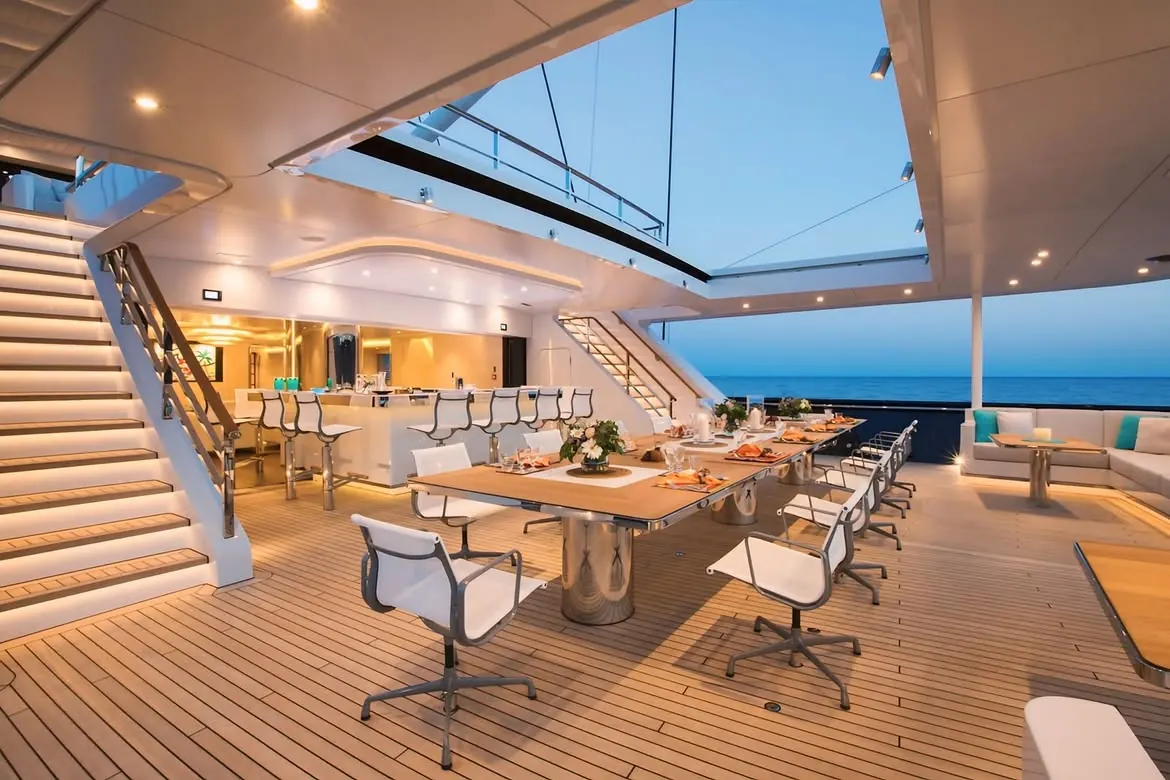
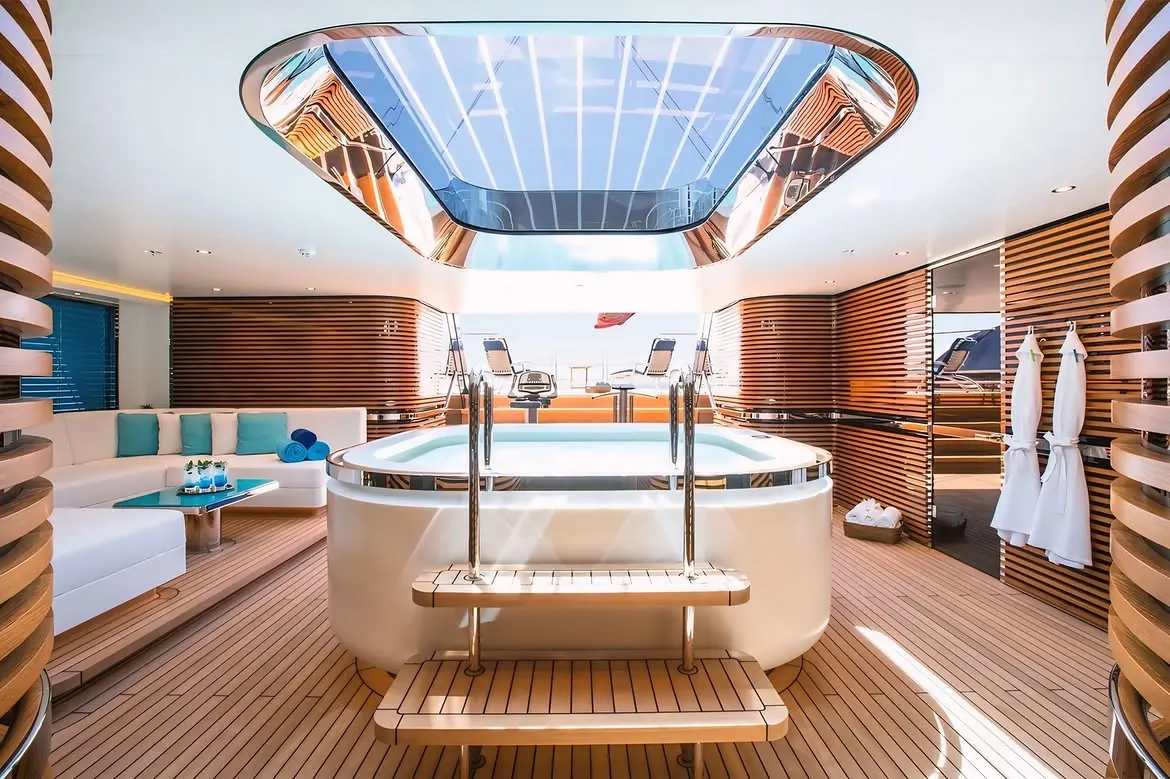
The beach club below deck, illuminated by a glass ceiling, includes a central pool, steam room, sauna, lounge, and an ocean-view Jacuzzi with direct access to the swim platform. Above, the main deck aft is open-plan and broad-beamed, designed to dissolve the boundary between interior and exterior. The flybridge allows guests to sit at the helm beneath the rig; the owner’s deck carries a rear-facing bedroom. Twelve guests are accommodated across seven staterooms, with a crew of up to 17.
A Decade On
Aquijo was sold in 2023, with Edmiston representing the original owner, German industrialist Jürgen Grossmann, and Y.CO representing the buyer.
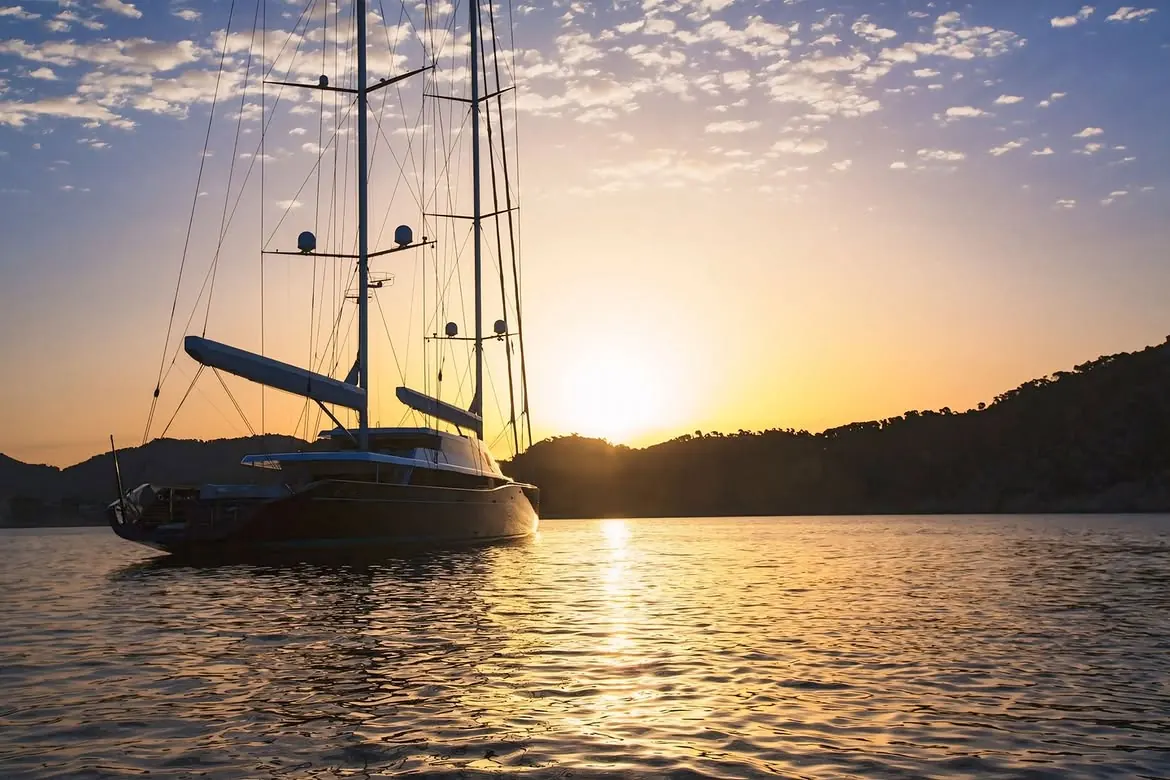
She remains the world’s largest ketch and the second-longest modern sailing yacht ever launched. The question that framed her conception, whether a yacht this large could be sailed properly, was answered in the Greek Aegean at 20.4 knots, and the answer has not needed revising since.
Stay ahead of the latest releases. Subscribe to our newsletter for editor-curated coverage of luxury timepieces across the Middle East.
Frequently Asked Questions
What makes Aquijo the world's largest ketch?
Aquijo measures 85.9 metres overall and carries a two-masted rig where the mizzen stands only 1.5 metres shorter than the main, both rising close to 90 metres. No other ketch-rigged sailing yacht has been built at this scale, placing her at the top of that classification since her 2016 delivery.
Who designed and built Aquijo?
Aquijo was jointly built by two Dutch shipyards: Oceanco in Alblasserdam, responsible for the hull engineering and systems integration, and Vitters in Zwartsluis, responsible for the sailing systems and bespoke deck hardware. Naval architecture and exterior design came from Tripp Design Naval Architecture, with interiors by the German firm Dölker + Voges.
What speed does Aquijo reach under sail?
During her maiden season in Greece, Aquijo recorded a maximum speed of 20.4 knots in 30–40 knot winds and averaged 19 knots, confirming that her scale had not compromised sailing performance.
What is the 'sketch' rig on Aquijo?
Naval architect Bill Tripp coined the term 'sketch' to describe Aquijo's configuration: technically a ketch, but with main and mizzen masts so close in height that the yacht sits between the ketch and schooner classifications. Tripp designed the rig so that loads on both masts and the jib would be broadly equal, requiring every piece of standing rigging to be custom-made.
How many guests can Aquijo accommodate?
Aquijo accommodates 12 guests across seven staterooms spread over four decks, supported by a crew of up to 17.
Aquijo’s record stands among a remarkable run of landmark launches: discover how Lürssen’s 114-metre Nausicaä redefines the modern superyacht, and explore more standout deliveries across our yachts and jets coverage.