Key Highlights
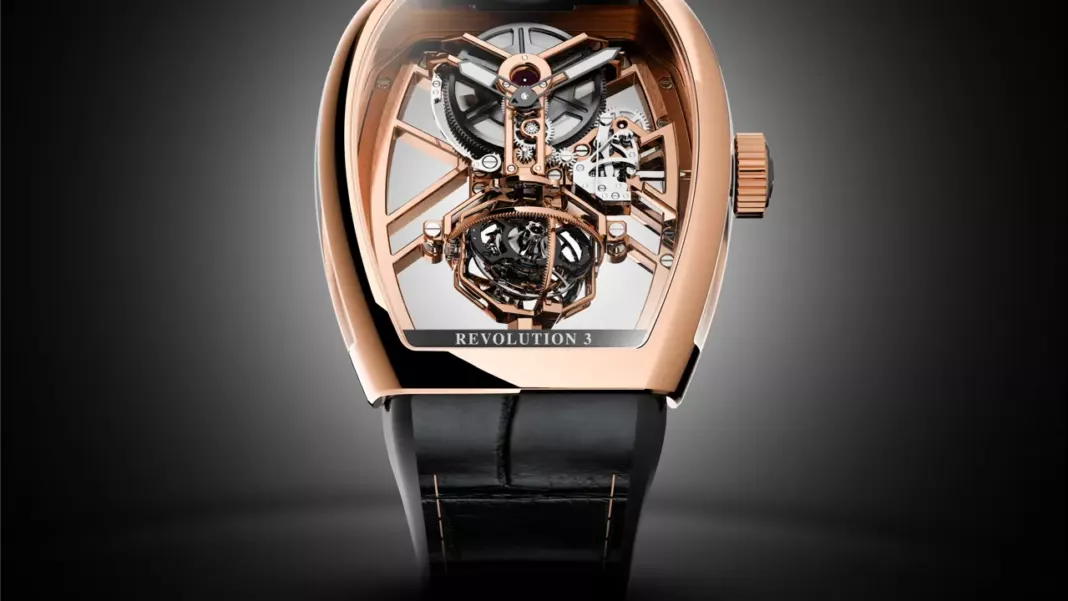
- World’s first tri-axial tourbillon, created by Franck Muller; now presented in a fully openworked rose gold case
- Three concentric cages rotating on independent axes correct gravity effects in all positions
- In-house MVT 2031-VS calibre, 280 components, movement mounted directly onto caseback; a Franck Muller first
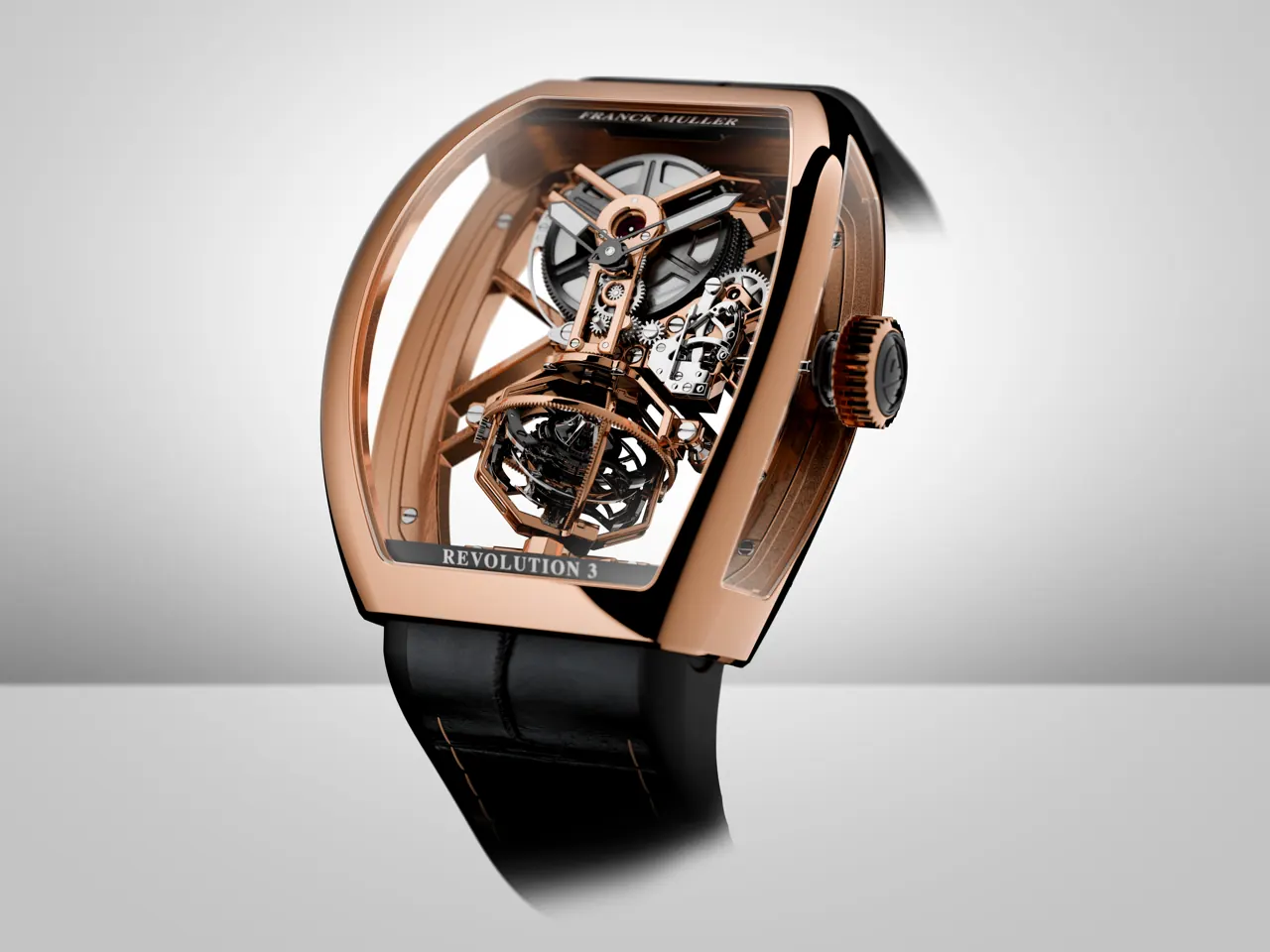
- 43.90 mm × 52.10 mm 18K rose gold Vanguard tonneau case, opened on all four sides
- 10-day power reserve sustained by twin barrels
The Tourbillon Redefined
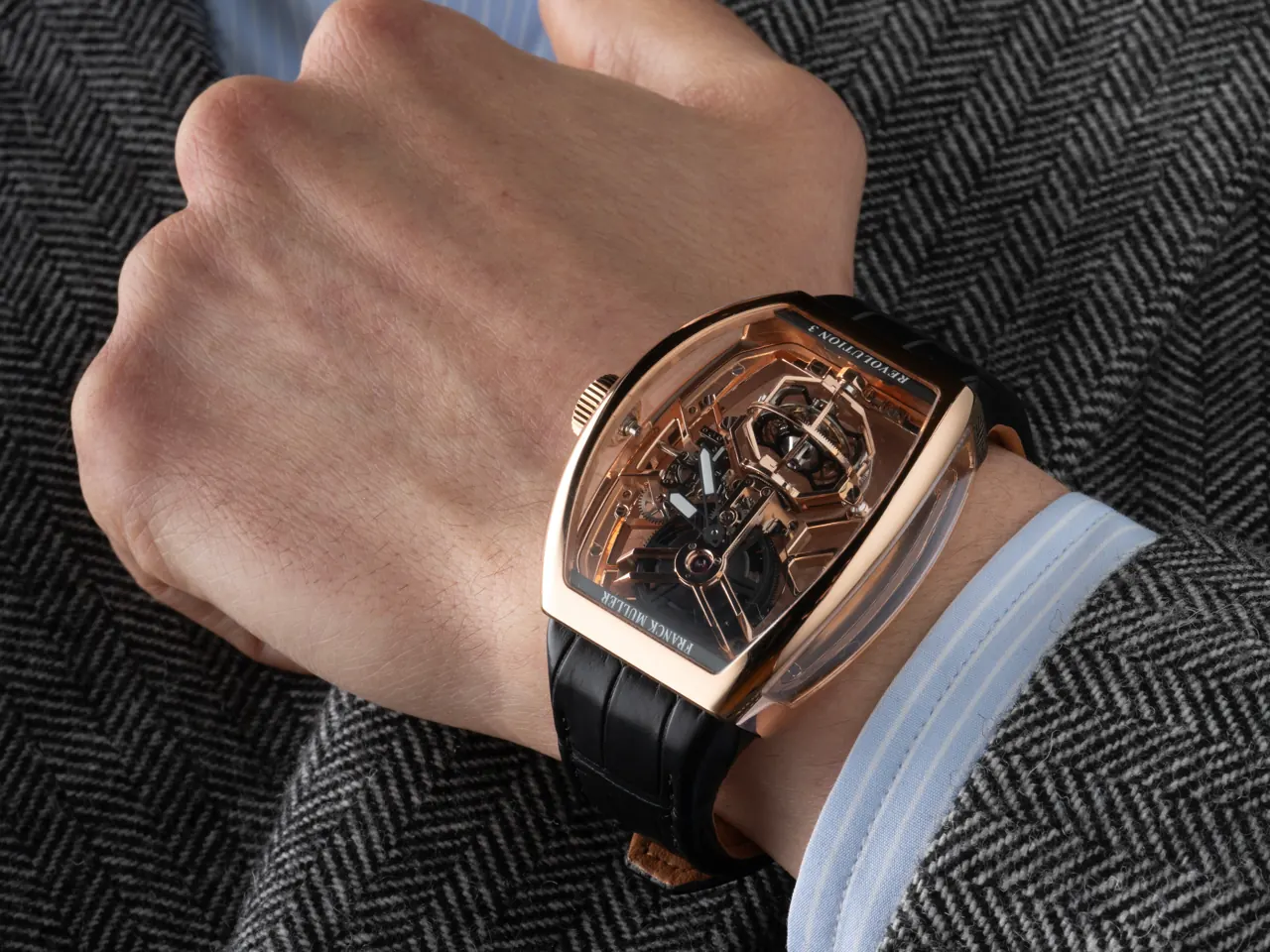
Franck Muller’s claim to horological history rests on one creation above all others: the world’s first Vanguard Revolution 3 Skeleton tri-axial tourbillon. The Vanguard Aero Revolution 3 Skeleton brings that complication to its most architecturally exposed form yet. Three concentric cages rotate on three independent axes. The inner cage completes one rotation in 60 seconds, the intermediate cage in eight minutes, the outer cage in one full hour. This multiplies the balance wheel’s spatial positions and corrects gravitational deviation in every orientation. A conventional tourbillon compensates only in the vertical position. This mechanism operates in every plane simultaneously, a distinction that remains among the most demanding achievements in haute horlogerie.
An Architecture Built Around the Movement
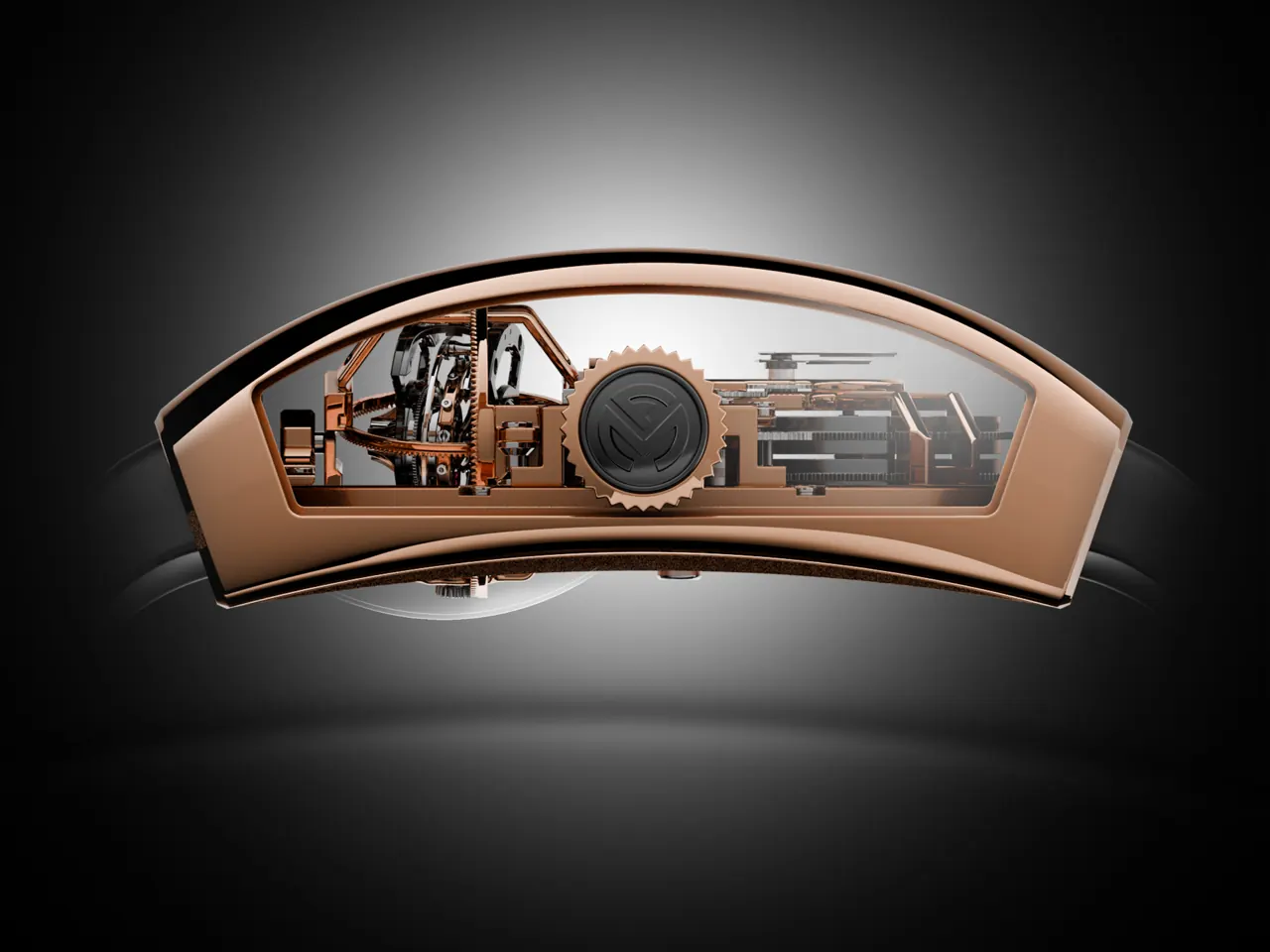
The Aero concept governs the case from every angle. Measuring 43.90 mm wide and 52.10 mm long in 18K rose gold, the Vanguard case has been opened on all four sides to expose the movement in full depth. Material has been reduced to the structural minimum on each flank; a precise engineering discipline made significantly harder by the Vanguard’s characteristic curved tonneau silhouette, whose compound contours demand exceptional machining tolerances. The result is a case that functions less as an enclosure and more as a sculptural frame around the calibre.
The MVT 2031-VS Calibre
At the centre of the construction lies the MVT 2031-VS, a manufacture calibre assembled from 280 components entirely in-house at the Watchland facility in Genthod. Its skeletonised architecture strips every bridge and plate to the elements strictly required for mechanical integrity. The movement is mounted directly onto the caseback; a configuration new to Franck Muller. This demanded a comprehensive rethinking of the bridge layout, barrel positioning, and gear-train geometry to maintain stability without compromising visual openness. Two barrels working in concert deliver the 10-day power reserve required to sustain the tourbillon’s uninterrupted triple rotation.
The Crown Solution
An openworked case of this scale creates a specific engineering problem: how to seal the crown against moisture without introducing visible mass. Franck Muller resolved this through a dedicated set of specially developed mechanical components integrated within the open construction. Crown removal, another potential disruption to the design, is handled via a corrector embedded in the caseback crystal, keeping the lateral profile uninterrupted. Clean. Considered. Entirely purposeful.
Rose Gold and the Integrated Strap
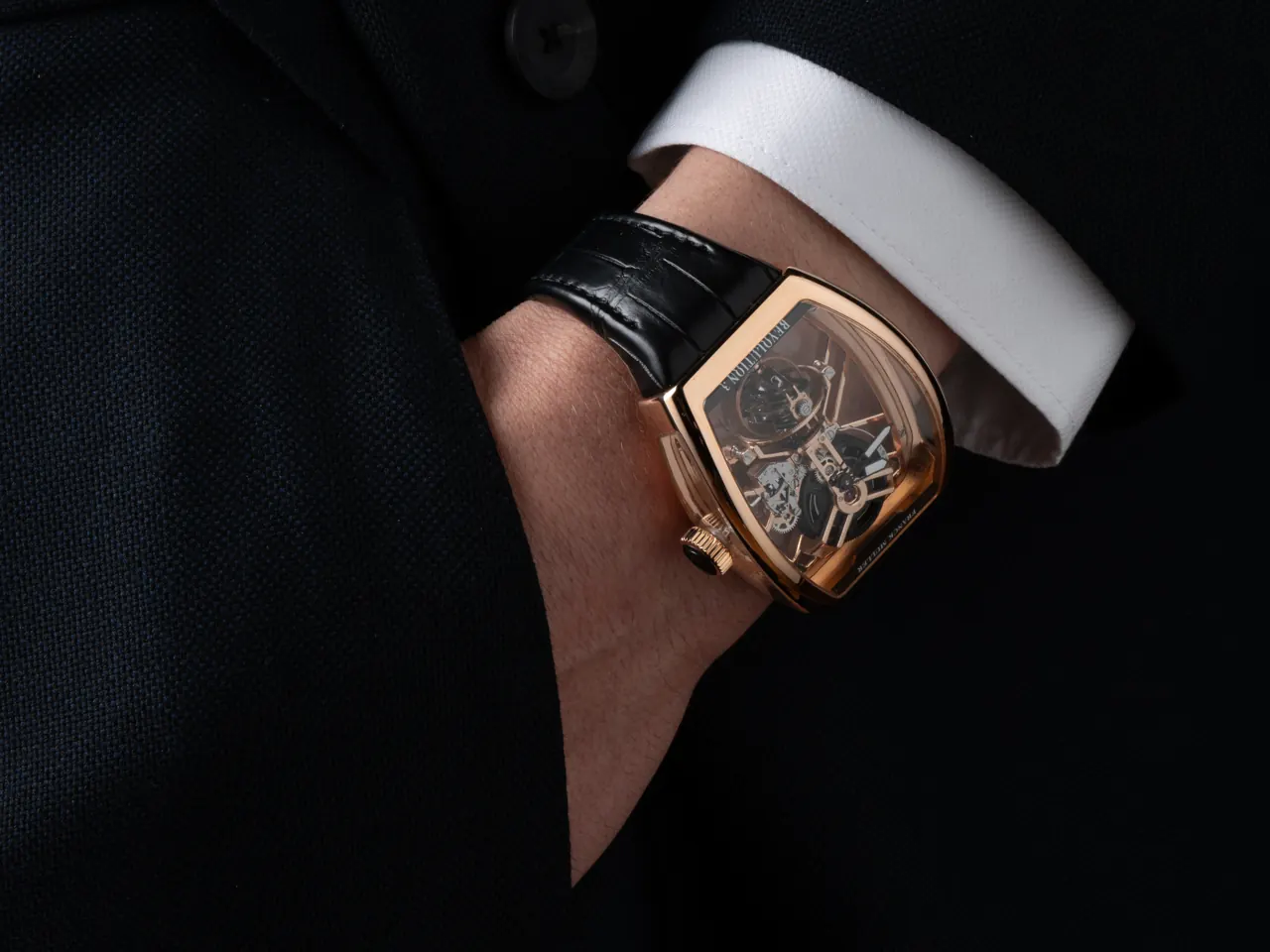
The 18K rose gold material brings warmth and visual weight to what is otherwise an open, gravity-defying construction. Solid rose gold imparts a depth of tone that no coating can replicate, and it grounds the skeletal mechanics with a material presence appropriate to the piece’s complexity. The integrated strap forgoes conventional spring bars in favour of two concealed screws that attach it directly to the case, producing a continuous line from lug to buckle. Edge stitching contributes both structural durability and a precise, couture-quality finish on the wrist. Those interested in the collection’s parallel skeletal references can consult the full coverage of Watches and Wonders for broader context on this generation of manufacture pieces. For full technical documentation, the Franck Muller website hosts the official reference information.
Why It Matters
The Vanguard Aero Revolution 3 Skeleton is not an exercise in surface ornamentation. It is a structurally unified argument; case, calibre, and complication designed as a single object, that the three-dimensional tourbillon remains one of watchmaking’s most legitimate demonstrations of mechanical mastery. For collectors across the Middle East who place technical conviction above decorative gesture, this is the piece that makes Franck Muller’s founding achievement visible from every angle.
Discover the watches shaping the Middle East market. Join our mailing list for ongoing reviews, releases, and collector insights.
Frequently Asked Questions
What makes the Franck Muller Vanguard Aero Revolution 3 tri-axial tourbillon different from a conventional tourbillon?
The Vanguard Aero Revolution 3 features three concentric cages rotating on independent axes. The inner cage completes one rotation in 60 seconds, the intermediate cage in eight minutes, and the outer cage in one full hour. This corrects gravitational deviation in every orientation, while a conventional tourbillon compensates only in the vertical position.
What is the power reserve of the Vanguard Aero Revolution 3?
The watch delivers a 10-day power reserve sustained by twin barrels working in concert within the MVT 2031-VS calibre.
How is the movement secured in the Vanguard Aero Revolution 3?
The MVT 2031-VS movement is mounted directly onto the caseback; a configuration new to Franck Muller. This required a comprehensive rethinking of the bridge layout, barrel positioning, and gear-train geometry to maintain stability while preserving the watch’s visual openness.