

Key Highlights
- Exceptionally rare 18k yellow gold Patek Philippe Ref. 2523 world-time with polychrome cloisonné enamel “South America” dial.
- One of only two examples known in yellow gold and the only one ever offered at public auction.
- To be presented as Lot 27 at Phillips Geneva Watch Auction: XXIII in May 2026, estimated in excess of CHF 5,000,000.
- Second-generation Louis Cottier world-time system in a 36mm, two-crown case.
- Returning to the market after nearly four decades with a preserved case and enamel dial.
A once-in-a-generation world-time trophy
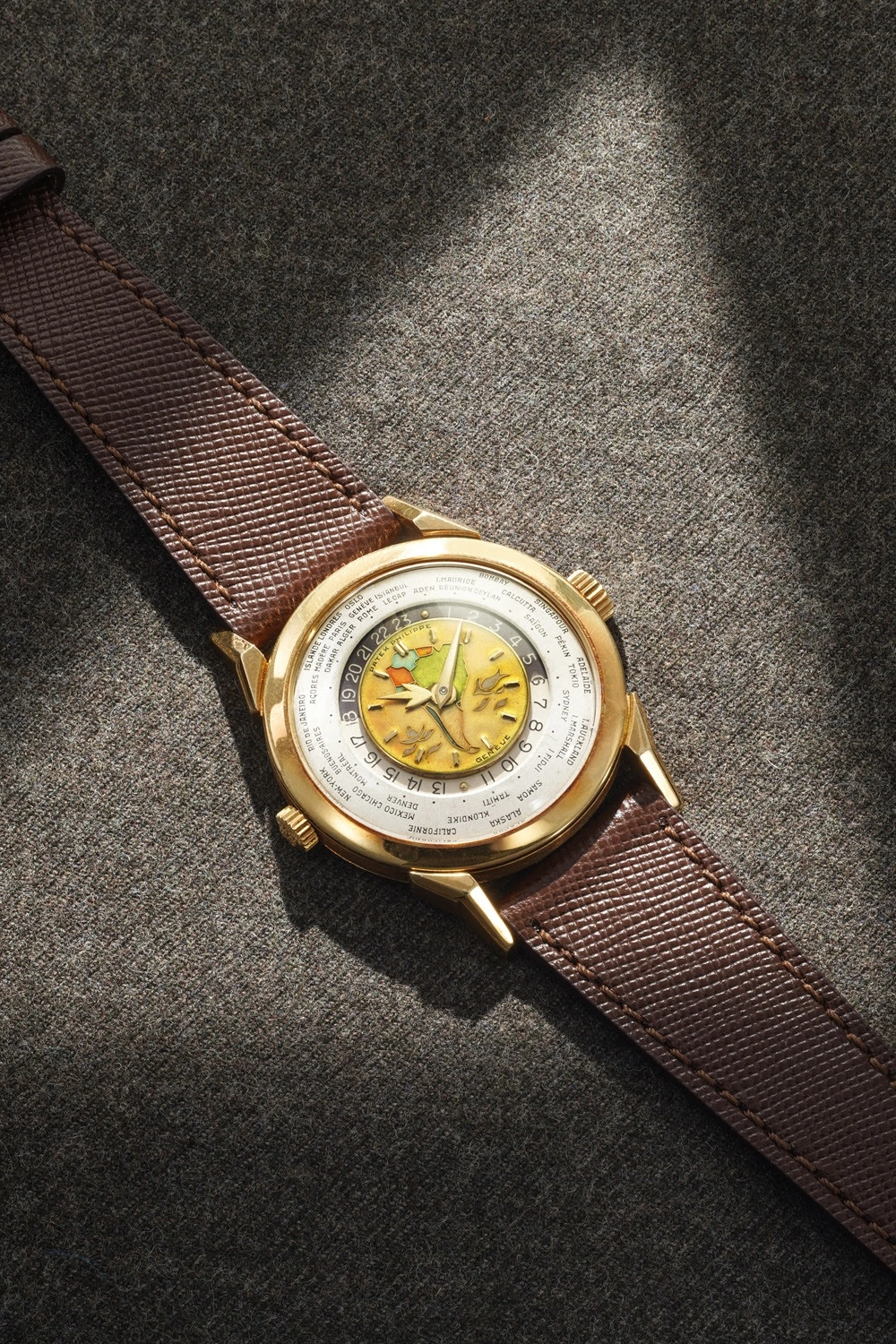
Among mid‑century Patek Philippe wristwatches, the World-Time Ref. 2523 sits at the summit of desirability. Produced from 1953 in very small numbers, it has long been regarded as a defining prize of vintage watchmaking, and Phillips in Association with Bacs & Russo will now offer an 18k yellow gold Ref. 2523 with a cloisonné enamel dial depicting South America.
Manufactured in 1953 and sold in 1958, this watch is one of just two examples known in yellow gold with the South America map and the only one ever to appear at public auction. It will headline the Phillips Geneva Watch Auction: XXIII this May as Lot 27, with an estimate in excess of CHF 5,000,000, and no yellow gold South America example has been publicly offered in nearly 40 years.

Within the already rare field of early Patek Philippe world-time wristwatches, this cloisonné enamel Ref. 2523 unites technical ingenuity, artistic craft and historical importance. Aurel Bacs, Senior Consultant, and Alexandre Ghotbi, Head of Watches, Europe and Middle East at Phillips in Association with Bacs & Russo, describe the watch as a treasure of vintage watchmaking and a generational event.
The evolution of Patek Philippe’s world-time
The Ref. 2523 represents the second generation of Patek Philippe’s serially produced world-time wristwatches, following the Ref. 1415 that first brought Louis Cottier’s 1931 mechanism to the wrist. The 2523 refined the concept with a 36mm case and a dual‑crown layout that lets the wearer consult the time across major world cities at a glance.
Scholarship suggests that between 29 and 36 examples of Ref. 2523 were produced across all metals and dial executions. Within that group, cloisonné enamel dials are the most sought-after, with three documented map motifs—Eurasia, North America and South America—and the South America version is regarded as the rarest, with only two yellow gold examples publicly known and this being the only one to reach a public saleroom.
Cloisonné enamel as horological art
The watch’s appeal centres on its polychrome cloisonné enamel dial, where fine gold wires define the continent and decorative motifs. Each cell is filled with coloured enamel and repeatedly fired until it fuses into the glass‑like surface associated with mid‑20th century work.
On the South America dial, the composition includes a stylised ship in the Pacific to the west and a fish or whale in the Atlantic to the east. According to an Extract from the Archives issued by Patek Philippe on 4 March 2026, this example left the manufacture with an “enamel dial, South America” and applied yellow gold hour markers, and it was last seen publicly at a New York auction in October 1988.
Why it matters
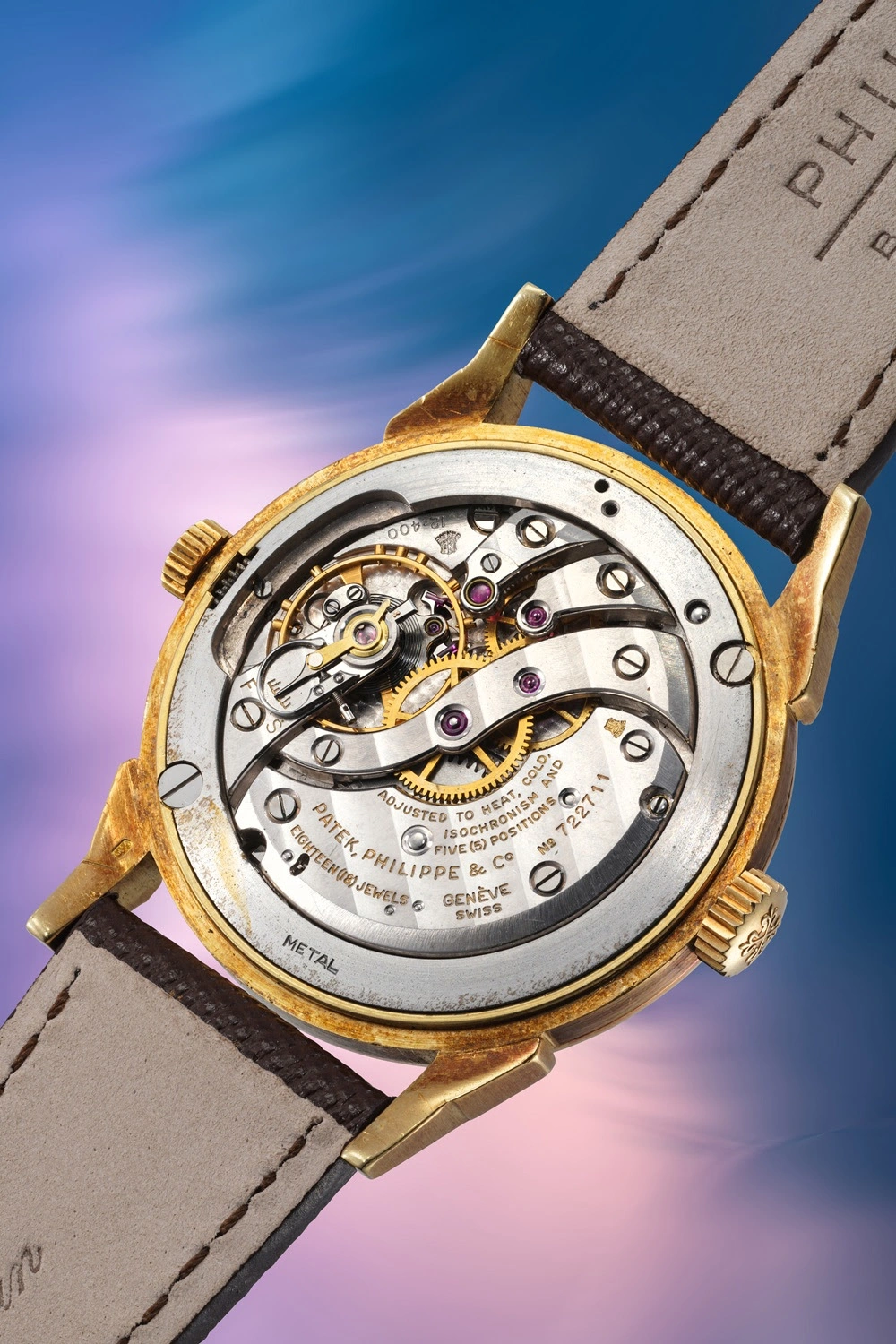
For collectors in the Gulf and worldwide, the appearance of this Ref. 2523 “South America” at Phillips Geneva Watch Auction: XXIII unites rarity, condition and historical importance in a single watch. It captures Patek Philippe’s most poetic take on the world-time complication and underlines Phillips’ strength at the top of the vintage wristwatch market.
For those who follow the highest tier of the vintage Patek Philippe segment, this watch will act as a benchmark against which future world-time offerings are judged and a reference point for how mid‑century complications, enamel artistry and documented provenance can align in a single, museum-worthy wristwatch.
| Case size | 36mm |
| Case material | 18k yellow gold |
| Price | estimate in excess of CHF 5,000,000 |
Frequently Asked Questions
What makes the Patek Philippe Ref. 2523 South America world-time so rare?
Only two yellow gold examples of the Ref. 2523 with the South America enamel dial are publicly known, and this is the only one ever offered at public auction. Between 29 and 36 examples of the Ref. 2523 were produced across all metals and dial executions, with the South America version regarded as the rarest among the three documented map motifs.
What is the cloisonné enamel dial on this watch made of?
The polychrome cloisonné enamel dial features fine gold wires that define the continent and decorative motifs, with each cell filled with coloured enamel and repeatedly fired until it fuses into a glass-like surface. The South America composition includes a stylised ship in the Pacific to the west and a fish or whale in the Atlantic to the east.
What technical innovations did the Ref. 2523 introduce?
The Ref. 2523 refined Patek Philippe’s world-time concept with a 36mm case and a dual-crown layout, where the nine o’clock crown rotates the city ring to consult the time across major world cities at a glance. It represented the second generation of the brand’s serially produced world-time wristwatches, following the Ref. 1415.